

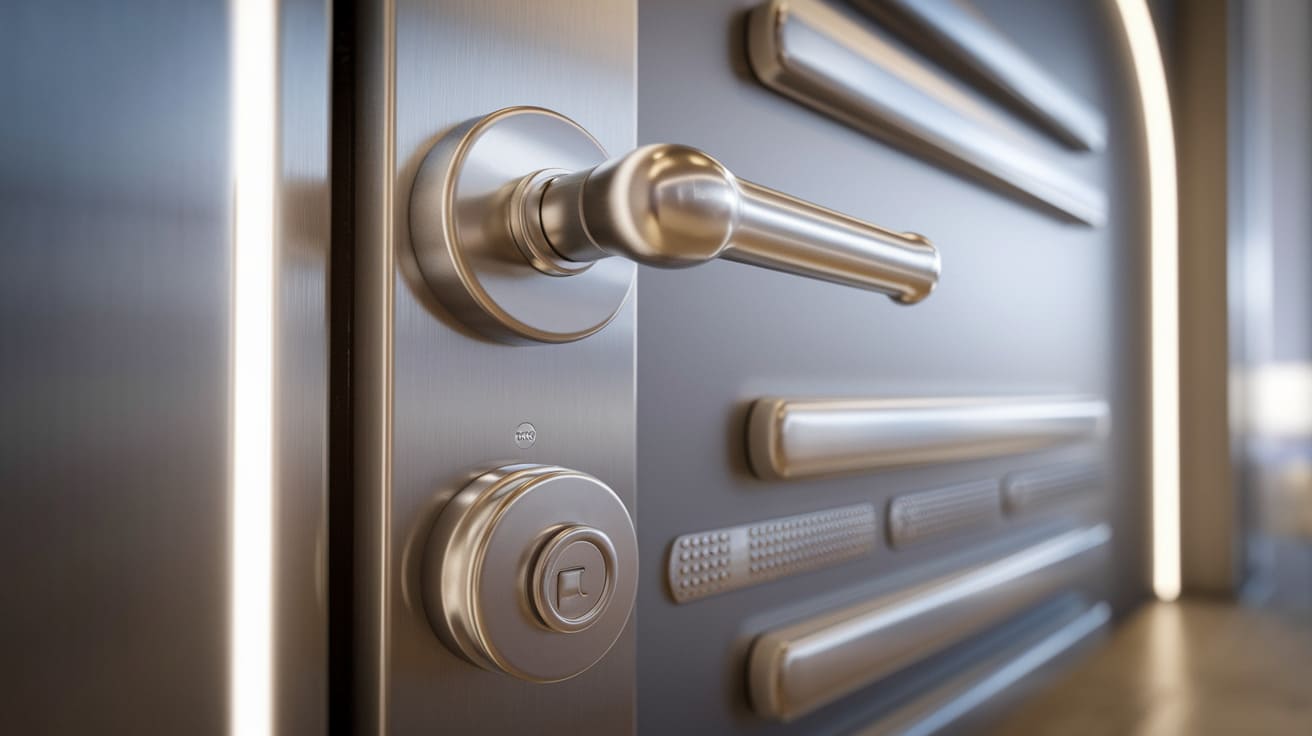
Approved Document M Accessibility is a statutory guideline embedded within United Kingdom building regulations that defines the accessibility requirements for buildings, ensuring equitable access and safe use for all individuals, particularly those with disabilities.
Approved Document M Accessibility specifies design parameters, measurement criteria, and performance benchmarks essential for creating accessible environments. It integrates technical standards with legal mandates, facilitating the construction of buildings that accommodate varied physical needs while ensuring compliance with statutory obligations.
Scope and Purpose
Approved Document M Accessibility delineates the minimum accessibility standards required in building design and construction. Its primary purpose is to provide a comprehensive framework that assists architects, builders, and property managers in creating or retrofitting buildings to be accessible by everyone. This regulatory instrument covers a wide array of building types, including residential, commercial, and public structures.
- Applicability:
It applies to new constructions as well as renovations of existing structures, ensuring that both processes adhere to uniform standards. - Objectives:
The document’s objectives include enhancing user safety, improving navigability, and ensuring that critical facilities, such as sanitary installations and emergency exits, are accessible. - User Relevance:
For property owners, facility managers, and regulatory bodies, the document serves as an indispensable tool to assess, plan, and execute necessary modifications in line with legal and functional accessibility requirements.
Development History
The evolution of Approved Document M Accessibility reflects a historical shift in the recognition of disabilities and the increasing importance of inclusive design in architecture. Initially, building regulations focused predominantly on structural integrity and fire safety. Over time, societal demands for equity led to the gradual inclusion of accessibility provisions, culminating in the comprehensive guidelines represented by Approved Document M.
Historical Milestones
- Early Legislation:
Early building regulations addressed genERAl safety but lacked explicit provisions for accessibility. The initial emphasis was on elements such as structural stability and fire prevention. - Advocacy and Reform:
Activism by disability rights groups and progressive legal reforms prompted the evolution of standards that recognized the unique needs of individuals with disabilities. - Integration into Building Regulations:
Over successive revisions, accessibility standards were integrated into the broader regulatory framework, eventually being codified as Approved Document M. Subsequent amendments have refined technical requirements and standardized measurement criteria. - Modern Updates:
Recent iterations have incorporated contemporary design principles and technological advancements, ensuring that the document remains relevant amid evolving construction practices and societal needs.
Structure of the Standard
Approved Document M Accessibility is organized into clearly defined sections, each addressing a specific component of accessible design and construction. The structure is designed to facilitate ease of implementation and clarity for all stakeholders.
Organizational Framework
- Access Routes and Entrances:
This section outlines criteria for ensuring that entrances to buildings are accessible. It covers aspects such as step-free access, ramp gradients, door widths, and threshold dimensions. - Circulation and Movement:
Standards for corridors, lifts, staircases, and other circulation areas are detailed to ensure unobstructed passage for individuals using mobility aids. - Sanitary Facilities:
Guidelines for designing accessible bathrooms and changing facilities include specifications for dimensions, fixture placement, and the inclusion of support elements such as grab rails. - Emergency Egress:
Special emphasis is placed on the design of emergency exits and evacuation routes, ensuring that they are accessible even under adverse conditions. - Supplementary Provisions:
Additional guidelines cover aspects such as signage, tactile indicators, and lighting—all intended to enhance overall accessibility.
Method of Presentation
The document leverages text, tables, and diagrams to illustrate the relationships between various architectural elements and their corresponding accessibility requirements. For example, detailed tables present measurement criteria in both metric and imperial units to accommodate diverse professional practices.
Example Table: Typical Ramp Specifications
| Parameter | Requirement | Comments |
|---|---|---|
| Maximum Gradient | 1:12 | Ensures ease of ascent for wheelchair users. |
| Minimum Width | 1200 mm | Accommodates mobility devices. |
| Landing Area | At least 1500 mm square | Provides rest areas and turning space. |
These standardized presentations allow for clear comparison, reference, and verification by professionals.
Key Definitions and Metrics
Understanding Approved Document M Accessibility necessitates a grasp of key terms and measurement standards utilized within the document. Precision in language and quantification is fundamental to ensure consistent application across diverse projects.
Essential Terminology
- Accessibility:
The degree to which buildings are designed to be usable by people regardless of physical limitations. This includes navigating through entrances, corridors, and public spaces. - Ramp Gradient:
A key measurement indicating the steepness of a ramp. It is expressed as a ratio (e.g., 1:12) that determines how gradual the incline must be. - Circulation Width:
Specifies the minimum clear space required in passageways to allow safe and unobstructed movement for users, particularly those with mobility impairments. - Threshold:
The design and dimension of the entry point between different levels, aimed at minimizing tripping hazards. - Emergency Egress:
The planned route of escape in emergencies, designed to be accessible to all occupants, including those with disabilities.
Measurement Standards
To ensure that accessibility features meet rigorous performance criteria, Approved Document M specifies detailed quantitative requirements:
- Dimensional Requirements:
Each component, from door dimensions to ramp lengths, is measured against predefined values to ensure universal usability. - Performance Metrics:
Metrics such as evacuation time, tactile contrast ratios, and structural clearances are rigorously defined. - Compliance Tools:
Checklists and measurement devices are recommended for on-site assessment, ensuring that implementations are verifiable and reproducible.
Application and Use Cases
Approved Document M Accessibility finds application in a wide range of architectural projects and building types. Its provisions are implemented from the inception of design to the final phases of construction and continual maintenance.
New Construction
- Integrative Design:
In new building projects, designers integrate accessibility requirements from the outset. This approach minimizes the need for retroactive modifications and fosters a cohesive design that inherently accommodates diverse users. - Regulatory Compliance:
Early incorporation of the standards aids in securing building permits and ensures that construction proceeds without delays due to non-compliance issues. - Design Synergy:
By aligning with Approved Document M, designers create aesthetically pleasing yet functionally superior environments that are inherently safer and more inclusive.
Retrofitting Existing Buildings
- Assessment and Audit:
Property owners and facility managers conduct comprehensive audits against the standards. These evaluations determine the extent of modifications required to bring older buildings into compliance. - Incremental Upgrades:
Retrofitting often occurs in phases to minimize disruption. Key improvements, such as widening corridors and installing ramps, are prioritized based on their impact on safety and accessibility. - Case Management:
Detailed project management practices are adopted to ensure that each retrofit meets the prescribed guidelines, with frequent reassessment and quality control.
Practical Use Cases
- Residential Applications:
Homeowners and landlords use Approved Document M to enhance living conditions and ensure legal compliance in multi-unit dwellings. Upgrading ensures that residents with disabilities have safe, comfortable access to common areas and amenities. - Commercial Developments:
Business premises, including offices, retail spaces, and public facilities, implement the guidelines to meet statutory obligations and promote an inclusive environment for customers and employees. - Public Infrastructure:
Government and public institutions, such as hospitals, schools, and community centers, leverage the standards to create equitable spaces that facilitate timely, safe evacuation during emergencies.
Approved Document M Accessibility is one among several building standards, each addressing different aspects of building design and safety. Its uniqueness lies in its detailed focus on accessibility, distinguishing it from other standards that might address overall building integrity or fire safety.
Distinguishing Features
- Specificity of Measures:
Unlike broader building regulations, Approved Document M provides explicit details on dimensions, measurement criteria, and performance benchmarks related to accessibility. - Legal Enforceability:
Compliance with Approved Document M is not optional. It has statutory authority and is enforced by local building inspectors, making it a critical aspect of legal building practice. - Technical Depth:
The standard offers an exhaustive set of technical specifications that enable professionals to execute designs with precision. This includes measured metrics such as ramp ratios, door clearances, and circulation space requirements. - Comparative Analysis:
When compared to other standards—such as those for fire safety or energy conservation—Approved Document M remains uniquely focused on mass accessibility and inclusive design.
Comparative Evaluation
A side-by-side comparison reveals that while standards for fire safety emphasize rapid egress and structural integrity, Approved Document M concentrates on ensuring that all users can navigate the built environment safely. Property managers and regulatory bodies acknowledge that an integrated approach, where both accessibility and other safety measures coalesce, results in more robust, resilient structures.
Industry Adoption and Regulatory Implications
The implementation of Approved Document M Accessibility influences a wide spectrum of stakeholders within the building industry. Its adoption is not only a compliance measure but also a driver for improved design, enhanced safety, and market value optimization.
Key Stakeholders
- Architects and Designers:
Professionals incorporate the standards during the design phase to ensure that new constructions are both legally compliant and functionally accessible. This approach reduces potential retrofit costs and enhances design reputation. - Construction and Engineering Firms:
These firms apply the technical specifications in their building practices, ensuring that structures meet all statutory requirements. Contractors benefit from clear, measurable objectives that facilitate quality control and risk management. - Regulatory Bodies:
Local authorities and building inspectors use the guidelines as benchmarks for site evaluations. Regular inspections and audits are conducted to verify that the constructed environment adheres to the defined standards. - Property Managers and Owners:
For those managing or owning facilities, compliance with Approved Document M implies reduced legal liability, improved tenant safety, and enhanced property marketability. An integrated accessibility approach often results in a higher rating for insurance and valuations.
Regulatory Consequences
Non-compliance with Approved Document M Accessibility carries significant legal risks. Enforcement is rigorous, with penalties including fines, mandatory modifications, and potential legal action in the event of accidents linked to inadequate accessibility features. Industries such as public infrastructure and commercial developments often face additional scrutiny due to the implications for public safety. As a result, many property owners invest heavily in periodic audits, specialized consulting, and adherence to a strict maintenance regime to ensure ongoing compliance.
Moreover, compliance with these standards can directly influence insurance policies and property valuations. In many cases, demonstrating adherence to Approved Document M serves as evidence of due diligence, thereby reducing liability and often leading to better insurance terms.
Safety and Compliance Considerations
Safety is a primary concern in the formulation of Approved Document M Accessibility. The document’s rigorous standards are designed to ensure that all building users, especially those with disabilities, experience a high level of safety and usability.
Enhancing User Safety
- Emergency Egress Provisions:
Approved Document M meticulously details the design for emergency exits, ensuring that accessible evacuation routes are unobstructed and clearly marked. Specifications cover elements such as door widths, ramp gradients, and the placement of safety fixtures, which are crucial during emergencies. - Safety Enhancements in Design:
The guidelines require attention to detail in installations. For instance, thresholds are designed to minimize tripping hazards, and tactile indicators are incorporated in circulation areas to assist visually impaired users. - Continual Monitoring:
Regular inspections and maintenance routines are mandated to ensure that accessibility features remain functional and effective over time. Compliance measures include periodic audits and the implementation of corrective measures when deficiencies are identified.
Addressing Compliance Challenges
- Assessment Procedures:
Comprehensive audits are essential in identifying non-compliances. These assessments rely on both quantitative measurements and qualitative evaluations of how accessible a building truly is. - Incremental Upgrades for Existing Structures:
Retrofitting older buildings poses unique challenges. A phased approach allows property managers to implement necessary changes gradually while maintaining usability during the transition. - Expert Intervention:
Engaging professionals with specialized expertise, such as those associated with Prime Alert – The London Locksmiths, can provide critical insights. These experts can help in determining the most effective modifications to achieve compliance while optimizing safety. - Documentation and Verification:
Detailed records and adherence to prescribed checklists are essential for demonstrating compliance. This documentation supports regulatory inspections and provides a roadmap for future maintenance and upgrades.
Copyright © 2025 Prime Alert Locksmith. All rights reserved.


