

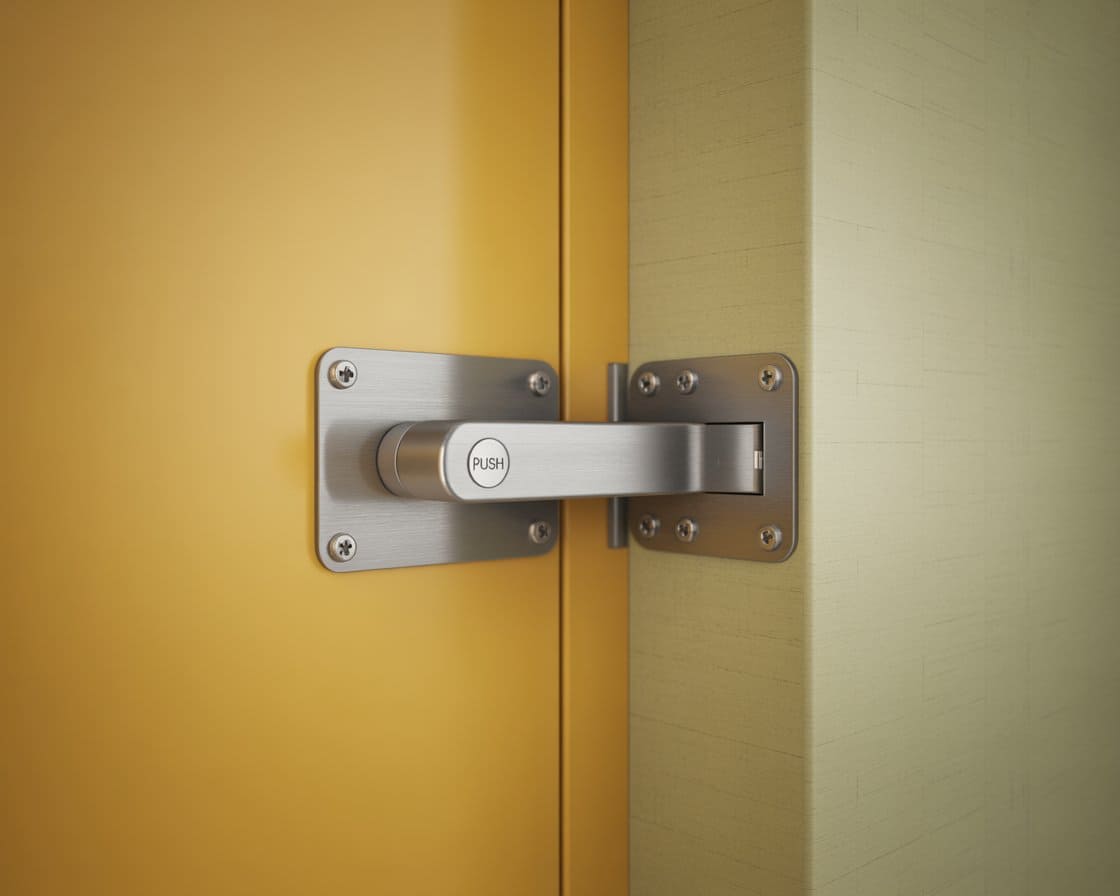
Brisant Locks are a brand of high-security locking systems renowned for their robust construction, advanced anti-pick and anti-snap technologies, and adherence to internationally recognized safety standards.
BS EN 1154 Door Closers are mechanical devices engineered to facilitate the controlled closing of doors in compliance with European safety and performance standards. They combine hydraulic mechanisms and adjustable damping systems to regulate door movement, thereby enhancing fire safety, energy efficiency, and overall building security. These door closers are critically important in protecting building occupants, minimizing energy loss, and ensuring the consistency of door operations in both routine and emergency situations.
In modern architecture, these devices are integrated into door systems across various building types including residential complexes, commercial properties, and public institutions. By meeting stringent performance benchmarks, BS EN 1154 Door Closers contribute to a building’s compliance with safety regulations and operational reliability. The design incorporates advanced mechanical engineering principles that enable reliable, repeatable performance over extended periods.
Scope and Purpose
BS EN 1154 delineates the technical requirements and testing protocols for door closers, ensuring that the devices achieve predictable performance levels in a variety of settings. This standard provides clear guidelines for installation, adjustment, and maintenance, thereby ensuring that door closers function effectively under different operational conditions. The scope of BS EN 1154 covers devices installed in private residences, offices, schools, hospitals, and other public buildings, reflecting its wide applicability.
Key Objectives:
- Safety Assurance: The standard is designed to minimize risks associated with door slamming and provide a controlled closing mechanism that enhances occupant safety during emergencies.
- Energy Efficiency: By regulating door closure speeds and preventing excessive force, these door closers help control air exchange, thus reducing energy losses due to drafts.
- Regulatory Compliance: Adhering to BS EN 1154 ensures that door closers meet national and European building codes, thereby protecting property owners from legal liabilities.
The standard supports stakeholders by defining measurable parameters such as closing speed, damping efficiency, and the durability of components. It is essential for those overseeing building management to understand the operational characteristics that BS EN 1154 Door Closers bring to various property types.
Development History
The evolution of door closers reflects a combination of technological innovation and stringent safety requirements. Historically, door closing mechanisms were simple, manually opERAted devices that provided minimal control over door movement. With the advent of hydraulic and pneumatic technologies in the early 20th century, engineers began developing more sophisticated systems capable of delivering controlled and consistent performance.
Milestones in Evolution
- Early Mechanical Systems: Initial door closers were rudimentary, often relying on basic spring mechanisms that did not offer precise control.
- Introduction of Hydraulic Technology: The integration of hydraulic dampening systems allowed for smoother and more predictable door motion. This advancement marked a significant turning point in reducing the risk of injury and improving energy efficiency.
- Standardization Efforts: In response to growing safety concerns and the need for unified performance metrics across Europe, standardization bodies collaborated with manufacturers, leading to the development of BS EN 1154. This effort helped consolidate diverse engineering practices into a single regulatory framework.
- Ongoing Revisions: The standard has been periodically updated to incorporate technological advancements, ensuring that the latest innovations in component materials, design methodologies, and testing procedures are reflected in current practice.
Throughout its history, BS EN 1154 has evolved to address both the practical needs of end users and the rigorous demands of safety regulators. Its development has been driven by the objective of harmonizing door safety protocols, thus facilitating a higher degree of consistency and reliability in building security systems.
Structure of the Standard
BS EN 1154 is structured to offer comprehensive guidance on door closer performance, installation, and testing. Its organization into multiple parts allows for a systematic evaluation of the devices, ensuring that each component and operational parameter is rigorously assessed.
Key Sections of the Standard
BS EN 1154-1: General Requirements
- Overview: This part outlines the general principles and scope of the standard, providing definitions and setting the baseline for performance evaluation.
- Performance Parameters: It establishes critical metrics including controlled closing speed and the damping characteristics required for safe operation.
BS EN 1154-2: Test Methods
- Detailed Test Protocols: This section specifies the methodologies for assessing door closer performance under various conditions.
- Measurement Techniques: It includes instructions on measuring closing force, damping efficiency, and other performance parameters using calibrated equipment.
- Repeatability and Reliability: Emphasis is placed on ensuring that test results are consistent across multiple trials to guarantee long-term durability.
BS EN 1154-3: Application Guidelines
- Additional Application Scenarios: This supplementary section provides guidance for specialized applications, such as installations in high-traffic environments or buildings with unique architectural requirements.
- Adjustment Procedures: Detailed instructions for fine-tuning door closers to meet specific operational demands are presented, ensuring that installations align with both safety standards and user needs.
Measurement and Evaluation
A critical component of BS EN 1154 is the precise measurement of performance metrics. The standard defines numerical benchmarks for parameters such as:
- Closing Time: The duration required for a door to complete a closing cycle.
- Force Regulation: The amount of force exerted by the door closer during operation, ensuring that the door closes without excessive force.
- Dampening Efficiency: The ability of the hydraulic system to mitigate shock and reduce noise, often quantified as a percentage of energy absorption.
These measurements are obtained through standardized test setups, ensuring that comparisons between different door closers are both valid and reliable.
Key Definitions and Metrics
The clarity of BS EN 1154 is achieved through precise definitions and carefully standardized metrics that underpin the performance assessments of door closers.
Technical Terminologies
Controlled Closing Speed
This term refers to the regulated rate at which a door is closed. A door closer must be calibrated so that the closing speed does not result in abrupt movement or slamming, which could compromise safety and contribute to wear.
Over-Tripping Protection
A mechanism integrated within the door closer that prevents the door from closing too forcefully once it reaches the closed position. This feature minimizes undue stress on both the door and the closer, preserving operational integrity.
Dampening Efficiency
Defined as the capacity of the hydraulic system to absorb kinetic energy, thereby reducing noise and ensuring a smooth door closing action. High dampening efficiency is critical for reducing vibrations and preventing abrupt closure.
Adjustment Mechanisms
These are the configurable elements of a door closer that allow installers to fine-tune parameters such as closing force and damping response. Adjustment mechanisms are essential for adapting the device to specific door types and use cases.
Empirical Metrics
The standard prescribes specific numerical benchmarks for these definitions. For example:
- Closing Time: Typically expressed in seconds, with a range that is deemed acceptable for various door weights.
- Force Metrics: Quantified using calibrated instruments to ensure that the pressure exerted is within safe operational limits.
- Efficiency Percentages: Often given in terms of energy dissipation rates, ensuring that the door closer operates within predetermined parameters.
These metrics are critical for validating that a door closer meets the rigorous performance standards mandated by BS EN 1154.
Application and Use Cases
BS EN 1154 Door Closers have practical applications across a variety of building environments, each requiring tailored performance characteristics to safeguard occupants and optimize building security.
Residential Settings
In residential buildings, door closers are deployed to ensure that doors close reliably, thus assisting in energy conservation by minimizing drafts. Homeowners benefit from the assurance that:
- Safety is Maintained: Controlled closing speeds prevent doors from slamming, reducing potential injuries.
- Energy Efficiency is Enhanced: By controlling airflow, these devices help maintain desired indoor temperatures.
- Ease of Use Meets Daily Demands: The devices operate unobtrusively while providing consistent performance, contributing to the overall comfort and security of a home.
Commercial Applications
Commercial properties such as offices, retail stores, and educational institutions require door closers that perform reliably under high usage conditions. In these scenarios:
- Uniform Performance is Critical: High-traffic environments demand door closers that can maintain consistent operation over extended periods.
- Regulatory Compliance Assists in Safety: These systems help meet stringent fire safety regulations, ensuring swift egress during emergencies.
- Maintenance Protocols are Integral: Regular inspections and adjustments are necessary to preserve the integrity of door closing mechanisms, thereby enhancing operational reliability.
Public and Institutional Environments
Public institutions, including hospitals, government buildings, and libraries, benefit from BS EN 1154 Door Closers as part of comprehensive safety systems. In these settings:
- Emergency Preparedness is Prioritized: The standardized performance of the closers ensures reliable door operation during critical moments, facilitating safe evacuation routes.
- Specialized Requirements are Met: Certain installations, such as those in historical buildings or sensitive environments, require door closers that align with both modern safety standards and specific architectural constraints.
- Integrated Safety Systems Support Broader Security Measures: When integrated with building automation systems, these door closers provide real-time performance data, enabling proactive maintenance and prompt responses to any deviations from benchmark performance.
Integration with Smart Building Systems
Although MS EN 1154 primarily specifies mechanical performance, modern door closing devices are increasingly integrated with smart building technologies. Such integration includes:
- Real-Time Monitoring: Sensors embedded within door closers can transmit operational data to building management systems, facilitating dynamic adjustments and predictive maintenance.
- Enhanced User Control: Facility managers can remotely monitor door performance, schedule maintenance, and adjust settings in response to environmental changes.
- Data-Driven Decision Making: The aggregated data from door closers contribute to broader building performance analytics, ensuring that safety, energy efficiency, and user comfort are continuously optimized.
BS EN 1154 is one of several standards that define the performance of door safety systems. A comparative analysis reveals unique attributes and overlapping concerns with related standards.
Comparative Analysis
Similar Standards:
- BS3621: This standard primarily governs door security systems, focusing on features such as tamper resistance and mechanical strength.
- PAS 24: Emphasizes enhanced doorsets including the integration of door closers, particularly in environments with higher security demands.
- EN 12209: Often associated with industrial settings, this standard outlines requirements for door hardware and associated components.
Distinguishing Features of BS EN 1154:
- Focus on Controlled Movement: Unlike some standards that emphasize static security features, BS EN 1154 is uniquely centered on the dynamics of door operation, which includes regulating closing speed and mitigating mechanical shocks.
- Integration of Hydraulic Systems: The standard specifically addresses the performance of hydraulic mechanisms, ensuring that they function within narrowly defined performance windows to guarantee safety and durability.
- Balanced Approach: BS EN 1154 balances safety with energy efficiency, making it particularly suitable for modern, energy-conscious building designs where operational smoothness is as critical as security.
Practical Implications
For property owners and facility managers, understanding these differences is crucial:
- Selection Criteria: When choosing door closers, the subtle nuances between different standards can influence product selection. Devices that comply with BS EN 1154 are specifically designed to ensure both operational continuity and safety under varied conditions.
- Maintenance Philosophy: Devices meeting this standard require regular, precise adjustments, and consistent testing to ensure their performance remains within the defined parameters.
- Regulatory Compliance: Adopting BS EN 1154 can simplify compliance with regional building regulations, reducing the risk of legal complications and insurance issues.
Industry Adoption
The widespread adoption of BS EN 1154 has significantly influenced how door closers are manufactured, installed, and maintained. This standard has set the benchmark for both product quality and performance in the security and building industries.
Manufacturer Implementation
Leading door closer manufacturers have incorporated BS EN 1154 requirements into their design and quality assurance processes. Key aspects include:
- Advanced Hydraulic Systems: Manufacturers use precision engineering to develop hydraulic dampening systems that meet the standardized performance benchmarks.
- Robust Testing Protocols: Products are subjected to rigorous testing under laboratory conditions, ensuring they can sustain long-term performance even under high traffic.
- Design Evolution: Continuous product innovation within the bounds of BS EN 1154 has led to improved durability, reduced noise, and enhanced energy efficiency.
Adoption by Service Providers
Contractors and installation professionals also play a critical role in the industry’s alignment with BS EN 1154:
- Installation Practices: Service providers adhere to strict installation guidelines that ensure the correct alignment and adjustment of door closers, thereby maintaining safety and compliance.
- Maintenance Protocols: Regular maintenance and inspection are integral to ensuring that installed devices continue to perform as expected. This includes periodic realignment, lubrication, and replacement of worn components.
- Role of Prime Alert – The London Locksmiths: For instance, Prime Alert – The London Locksmiths focuses on ensuring that all of their installations meet or exceed these standards, thereby providing property managers and owners with trusted, compliant door safety solutions.
Market Acceptance
Industry-wide, BS EN 1154 has become synonymous with reliability and consistency:
- Regulatory Recognition: The standard is widely acknowledged by building regulators and insurance providers as a benchmark for quality and safety.
- Competitive Advantage: Manufacturers and service providers that strictly adhere to BS EN 1154 often showcase this compliance as a key selling point, ensuring that potential customers recognize the value of a rigorously tested and approved door closer.
- Quality Assurance: The holistic approach, from design through installation and maintenance, reinforces the standard’s role as a cornerstone of building safety protocol.
Regulatory Implications
Compliance with BS EN 1154 carries significant regulatory and legal consequences, particularly pertaining to building safety codes and public liability.
Legal Framework
BS EN 1154 is embedded within the broader framework of European and national building regulations:
- Building Codes: National building codes often reference BS EN 1154 as the definitive guideline for door safety devices. Adherence to this standard is typically required to meet fire safety and emergency egress regulations.
- Insurance Requirements: For property managers and owners, the use of BS EN 1154-compliant door closers can be instrumental in meeting insurance criteria, thereby reducing liability in the event of an incident.
- Certification Processes: Regular, documented testing and certification of door closers ensure ongoing compliance, providing both legal protection and tangible assurance of product quality.
Safety and Liability
From a regulatory perspective, BS EN 1154 serves to minimize risks associated with door operation:
- Enhanced Safety Measures: By specifying performance benchmarks and rigorous testing protocols, the standard helps to ensure that devices do not fail under stress, thereby safeguarding occupants during emergencies.
- Risk Mitigation: Non-compliance with the standard can result in increased liability, potentially causing higher insurance premiums, legal disputes, or even fines from regulatory bodies.
- Stakeholder Benefits: For facility managers and property owners, compliance is not only a matter of legal obligation but also a fundamental component of risk management and assurance of operational safety.
Enforcement and Compliance
Regulatory bodies enforce BS EN 1154 through periodic inspections and compliance audits:
- Inspection Protocols: Regular audits and assessments ensure that installations consistently meet the defined performance criteria.
- Documentation and Records: Maintaining comprehensive records of testing, installation, and maintenance activities is essential, both for regulatory compliance and to support insurance claims if necessary.
- Legal Recourse: Failure to adhere to the standard can expose property managers and contractors to legal challenges, emphasizing the importance of integrating robust compliance protocols into everyday operations.
Copyright © 2025 Prime Alert Locksmith. All rights reserved.


