

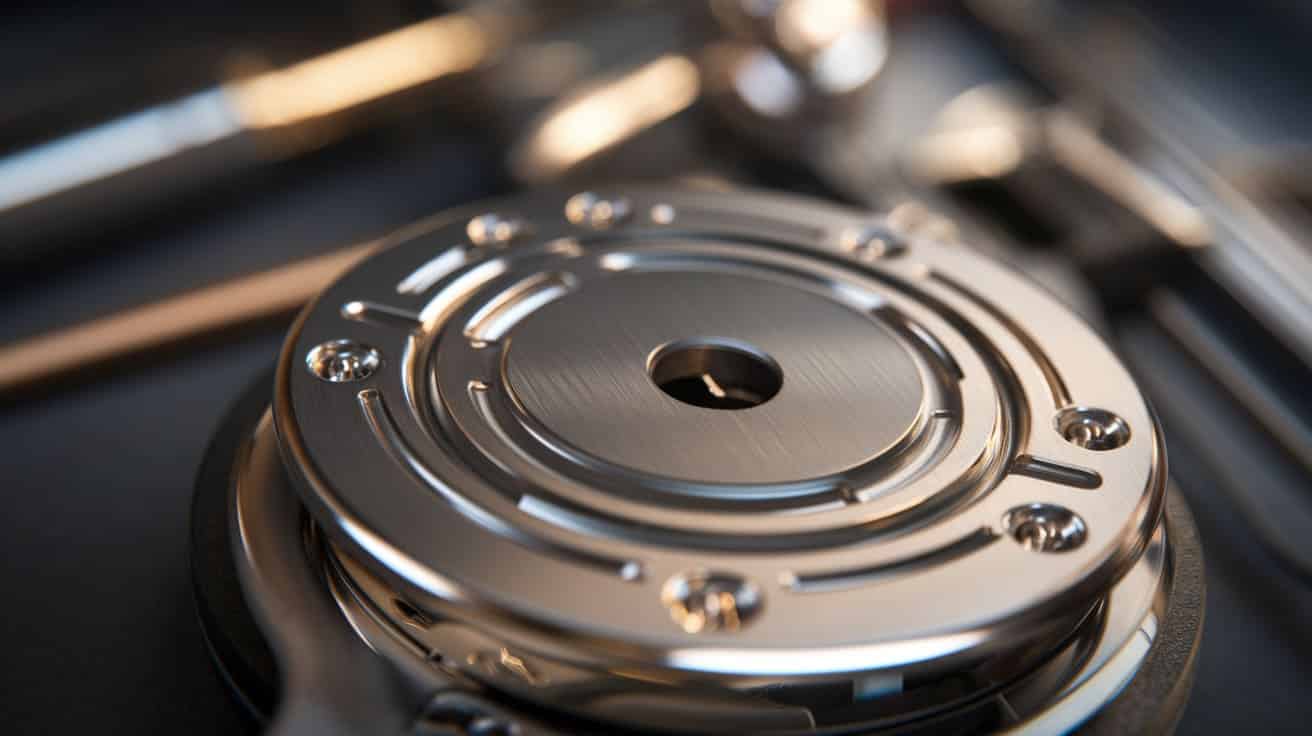
Disc detainer locks are mechanical locking devices that rely on the coordinated rotation of precision-engineered metal discs to secure access. They employ a series of independently rotating discs, each aligned by a specially cut key, to either allow or block the opERAtion of a cam-based unlocking mechanism. These locks are recognized for their enhanced resistance to conventional picking methods and are widely implemented in high-security applications across residential, commercial, and specialized institutional environments.
Definition and Description
Definition
Disc detainer locks are high-security locking systems designed with a set of rotating metal discs arranged in a fixed stack. Each disc, having its own unique cut profile, must align precisely when the correct key is inserted, allowing a cam to engage and release the locking mechanism.
Core Components and Mechanism
Disc detainer locks differ fundamentally from traditional pin tumbler systems through their distinctive architecture:
- Rotating Discs: Each disc is manufactured to exacting tolerances. The precise angular orientation of these discs is critical for proper lock operation.
- Key-Disc Interface: The key used in these locks is intricately milled with varying cut depths. Each cut rotates a corresponding disc to a specific position.
- Cam Mechanism: A cam is integrated into the assembly to interact with the array of discs. When all discs are correctly aligned, the cam rotates, allowing the lock to open.
- Housing and Alignment: The lock casing is designed to securely contain the disc assembly, maintaining alignment and resisting external physical manipulations.
Composition and Materials
These locks are predominantly constructed from:
- Precision-Hardened Steel: Offers high resistance to wear and mechanical attacks.
- Anti-Corrosion Coatings: Extend the life of the lock by protecting against environmental factors.
- Machined Components: Manufactured using high-precision CNC equipment to maintain strict tolerances.
The combination of these materials and techniques ensures that disc detainer locks can maintain their security properties over long periods and under adverse conditions.
Historical Context and Evolution
Historical Emergence
Disc detainer locks emerged as an innovative solution in response to vulnerabilities identified in traditional pin tumbler systems. Early locks, though widely used, became susceptible to specialized picking techniques. Manufacturers, seeking to enhance security, began exploring alternative designs that would improve resistance to tampering.
Evolution of Design and Manufacturing
- Early Days: Initial disc detainer locks were predominantly found in niche markets where maximum security was paramount, such as in financial institutions and government facilities.
- Technological Advancements: Advances in metallurgy and precision machining in the late 20th century enabled the production of discs with extremely low tolerances. This evolution allowed manufacturers to implement designs that could withstand a greater range of physical attacks.
- Regulatory Influence: With the advent of updated safety and security standards (e.g., BS3621 and TS007), disc detainer locks gained further credibility. These standards mandated rigorous performance testing and certification, which in turn drove improvements in design.
- Modern Adoption: Today, disc detainer locks are integrated across a wide spectrum of applications, from premium residential properties to large-scale commercial installations, and are especially valued in contexts where security breaches could have significant consequences.
Milestones in Development
- Introduction of Precision Machining: The evolution from hand-finished components to CNC-machined discs marked a significant breakthrough, reducing variability and enhancing performance.
- Integration of Advanced Materials: The incorporation of specialized alloys and coatings significantly boosted the locks’ ability to resist wear and environmental degradation.
- Standardization Efforts: The establishment of international standards confirmed the robust nature of these locks and contributed to their widespread acceptance.
Technical Characteristics and Operation
Working Principle
Disc detainer locks operate by using a series of thin, rotating discs arranged in a precise stack:
- Rotational Alignment: When the correct key is inserted, the specific cuts on the key cause each disc to rotate to a designated angle.
- Cam Activation: With all discs aligned, the cam mechanism can rotate freely, disengaging the locking bolt.
- Blocking the Mechanism: If even one disc is misaligned, the cam remains obstructed, and the lock does not open, thereby ensuring security.
This mechanism makes it inherently more resistant to conventional lock picking, as an unauthorized key or tool would struggle to replicate the precise alignment needed across multiple discs.
Material Science and Construction Techniques
Material Composition
- Hardened Steel: Used for manufacturing the discs due to its high resistance to mechanical penetration.
- Advanced Coatings: Protective layers applied to mitigate corrosion and reduce friction, thereby enhancing performance over time.
- Precision Alloys: Selected to provide optimal performance under variable temperature and environmental conditions.
Construction
- High-Precision Machining: Utilizes computer numerical control (CNC) machinery, providing better consistency than traditional methods. Each disc must be manufactured with extremely tight tolerances.
- Component Integration: The assembly involves a robust housing that ensures the correct positioning of each disc while preventing external manipulation.
- Quality Assurance: Rigorous inspection procedures are employed such as dimensional checks, surface integrity analysis, and functional performance tests.
Security Attributes
Resistance to Manipulation
Disc detainer locks are engineered to resist many forms of traditional lock attacks:
- Picking: The multiple-disc alignment requirement complicates unauthorized entry attempts significantly.
- Bumping: The specific design and tolerance levels reduce the efficacy of bumping techniques.
- Forced Entry: The robust construction and hard materials used render these locks highly resistant to physical attacks such as drilling or prying.
Mechanical Tolerances
The effectiveness of disc detainer locks is highly dependent on mechanical tolerances:
- Precise Alignment: Tolerances ensure that every disc and the key interact correctly. Variations may introduce vulnerabilities.
- High Security Certification: Many disc detainer locks adhere to strict international testing standards, confirming their performance under simulated attack conditions.
Applications and Use Cases
Residential Security Applications
In premium residential settings, disc detainer locks are increasingly adopted for their high-security features:
- Front Door Protection: Offering enhanced resistance against unauthorized entry.
- Internal Security: Securing private rooms or areas where extra protection is desired.
- Insurance Compliance: Their adherence to rigorous standards makes them attractive for meeting the security criteria set out by insurance providers.
Commercial and Institutional Implementations
Commercial properties and institutions often require robust security solutions:
- Office Buildings: Disc detainer locks are a common component of integrated access control systems in commercial establishments.
- Government Facilities: High-security installations, where the cost of a breach is high, often utilize these locks.
- Public Institutions: Educational institutions and hospitals, where safety is non-negotiable, may deploy these lock systems to protect sensitive areas.
Specialized Installations
Some properties demand unique security solutions that only disc detainer locks can provide:
- Heritage Sites: The unobtrusive, yet effective nature of these locks makes them suitable for historical buildings where both security and aesthetic considerations are paramount.
- High-Risk Facilities: Installations requiring enhanced security protocols, such as data centers and military installations, benefit from the locks’ design.
- Industrial Applications: In environments where robust mechanical performance is required despite heavy use, disc detainer locks stand out due to their durability and resistance to wear.
Summary of Use Cases
For a property manager, selecting disc detainer locks can provide:
- Enhanced security against subversive entry techniques
- Conformance with regulatory standards, reducing legal risks
- A balanced solution between performance and long-term maintenance costs
Standards, Classifications, and Compliance
Relevant Standards
Disc detainer locks are subject to various established standards that address aspects of performance, safety, and quality:
- BS3621: British Standard for secure locks and associated hardware, which specifies criteria for performance and resistance.
- TS007: A standard that outlines the testing methodologies used to assess high-security locks, focusing on durability and attack resistance.
- EN Standards: European Norms (such as EN 12209 and EN 1303) provide benchmarks for different types of locking mechanisms, including those used in commercial applications.
These standards ensure that disc detainer locks meet specified thresholds for security, and compliance is verified through rigorous testing by independent agencies.
Classification within the Security Landscape
The classification of disc detainer locks often places them alongside other high-security mechanisms:
- High-Security Locks: They are part of a broader category that includes mortise, biometric, and electronic locks due to their enhanced resistance.
- Mechanical Locks: Within the realm of mechanical solutions, disc detainer locks differentiate themselves by using a disc-based mechanism rather than traditional pin systems.
- Quality Certifications: Many disc detainer locks that meet these standards are certified by recognised independent testing bodies, providing an independent validation of their security attributes.
Regulatory and Quality Certification
Compliance with these standards is critical for both consumer confidence and legal assurance:
- Independent Testing: Locks undergo laboratory tests that simulate various attack methodologies, ensuring they can withstand real-world conditions.
- Certification Processes: Successful certification provides a benchmark against which performance is measured, establishing a clear metric for security.
For commercial and institutional implementations, adherence to these standards is often a prerequisite, with regulators enforcing compliance to mitigate risks associated with unauthorized access.
Maintenance, Reliability, and Service Considerations
Routine Maintenance Practices
Maintaining the optimal performance of disc detainer locks requires regular and systematic maintenance:
- Lubrication: Proper lubrication of the moving parts minimizes friction and wear, ensuring smooth operation.
- Inspection: Regular inspection of disc alignment and assessment for signs of wear (e.g., micro-abrasions) are recommended to prevent degradation.
- Calibration: Periodic recalibration of the discs and cam mechanism helps maintain the precise tolerances required for optimal security.
- Environmental Considerations: Protection against environmental factors such as moisture and dust is essential for maintaining longevity.
A maintenance schedule that includes these practices ensures that the lock functions as intended over its service life, thereby enhancing overall security.
Reliability and Longevity
The durability of disc detainer locks is paramount to their long-term efficacy:
- Quality of Materials: The use of high-grade materials such as hardened steel contributes significantly to the lock’s long-term reliability.
- Manufacturing Precision: Advanced manufacturing techniques that ensure minimal tolerance variation play a critical role in reliability.
- Service Life Metrics: Industry standards often include metrics such as mean time between failures (MTBF), which assists in evaluating the expected lifespan of the locks.
- Regular Servicing: Implementing a structured servicing routine further reduces the likelihood of premature failure, ensuring robust performance over time.
For property managers and facilities directors, reliable locks reduce the frequency of emergency service calls and overall maintenance costs.
Professional Support and Service Models
For optimal performance and longevity, professional installation and periodic servicing are highly recommended:
- Installation Expertise: Professional technicians ensure that the delicate components of disc detainer locks are correctly installed without compromising the required tolerances.
- Post-Installation Checks: Routine audits by security experts help verify that the lock maintains its integrity over time.
- Warranty and After-Sales Support: High-security locks typically come with warranties that guarantee performance, which are reinforced through professional servicing plans.
Access to skilled technical support is essential in managing the lifecycle of the locks, especially in complex multi-property setups.
Expert Analysis and Technical Insights
Mechanical Performance Evaluation
Expert assessments of disc detainer locks focus on several key technical parameters:
- Rotational Tolerance: The precision with which the discs rotate and align directly influences the lock’s security performance. Any deviation from the ideal tolerance can compromise the mechanism.
- Key-Disc Dynamics: The interaction between the key’s cut profile and the discs’ surfaces is fundamental. Experts use high-precision instruments to measure the efficacy of this interaction.
- Cam Engagement: The degree of smoothness in cam operation is scrutinized as it affects both the speed of unlocking and overall reliability during repeated use.
Diagnostic and Assessment Tools
A range of specialized tools and methodologies is employed to evaluate the performance and integrity of disc detainer locks:
- Precision Measurement Instruments: Calipers and micrometers are used to ensure every disc meets the required dimensions.
- High-Resolution Imaging: Imaging technologies assist in detecting minute wear patterns and surface imperfections.
- Torque Testing Devices: These devices measure the exact amount of force required to rotate the discs and operate the cam.
- Simulated Attack Testing: Controlled testing environments simulate physical attacks, allowing experts to evaluate the lock’s resistance to picking, bumping, and drilling.
These diagnostic tools provide a rigorous framework for analyzing the operational characteristics of disc detainer locks, ensuring that they meet the exacting demands of high-security installations.
Comparative Technical Analysis
When evaluating disc detainer locks against other high-security mechanisms, several factors are considered:
- Resistance to Traditional Attacks: The inherent design of disc detainer locks, which requires precise alignment of multiple discs, offers superior resistance to picking and bumping compared to conventional lock systems.
- Operational Efficiency: The precision in manufacturing results in smooth operation, reducing the likelihood of jamming or malfunction under normal use.
- Maintenance Requirements: Although they require regular maintenance to preserve precise tolerances, the overall reliability and durability of disc detainer locks often result in lower long-term maintenance costs.
- Cost versus Performance: While the initial installation cost may be higher, the enhanced security and longevity contribute to a favorable cost-performance ratio, particularly in environments where security is paramount.
These comparative insights help stakeholders such as facilities managers and security consultants make informed decisions when selecting high-security locking solutions.
Common Questions and Concerns
Consumer-Level Inquiries
- How are disc detainer locks different from traditional pin tumbler locks?
Disc detainer locks use multiple rotating discs rather than pins, requiring a more complex key profile for operation. This complexity increases the lock’s resistance to common picking and bumping techniques, making it a preferred choice for enhanced security applications. - What factors should be considered when choosing disc detainer locks for a residential property?
Homeowners should consider the lock’s resistance to tampering, compliance with industry standards, and long-term maintenance requirements. The precision manufacturing that underpins these locks ensures high security, although proper installation and routine servicing are critical for optimal performance. - Are disc detainer locks suitable for environments with extreme weather conditions?
Yes, many disc detainer locks incorporate corrosion-resistant coatings and high-grade materials that enable them to perform reliably even under challenging environmental conditions. However, regular maintenance and proper installation are essential to mitigate any potential environmental impacts.
Expert-Level Inquiries
- What role do mechanical tolerances play in the security performance of disc detainer locks?
Mechanical tolerances are critical as they determine the exact fit and alignment of each disc within the lock mechanism. Even minor deviations can compromise the overall security, making precision manufacturing essential. Consistent tolerances ensure that the discs operate harmoniously to resist unauthorized entry. - What diagnostic methodologies are recommended for assessing the integrity of these locks in high-risk installations?
Specialists typically employ precision measurement techniques, high-resolution imaging for wear analysis, and torque testing to evaluate the cam’s performance. In addition, simulated attack scenarios are conducted to gauge the lock’s response under pressure, ensuring that the lock maintains its security function even after extensive use. - How do disc detainer locks compare with other modern high-security locking systems in terms of durability and maintenance?
While disc detainer locks may require more precise maintenance, such as periodic lubrication and alignment inspections, they generally offer superior durability due to the high-grade materials and advanced manufacturing processes used. Their enhanced resistance to physical attacks often offsets the additional maintenance efforts, resulting in a robust overall security solution.
Copyright © 2025 Prime Alert Locksmith. All rights reserved.


