Apartment Building Security Guide For Tenants And Landlords
 Apartment Building Security Guide For Tenants And Landlords
Why Do Most Flats and Landlords Miss Security Gaps Others Spot Instantly?
Security issues in apartment buildings rarely materialise overnight. They accumulate quietly as doors get stiff, intercoms glitch, and communal locks wear down—until the opportunist finds the one flaw nobody noticed.
The easiest way in is the one everyone takes for granted.
Right now, one in four UK flats runs on outdated or eroded locks—a ready-made entry point for anyone looking to exploit weak spots (locksandkeyssurrey.co.uk). If your block has never experienced a break-in, it’s not a reason to get complacent; it just means nobody’s tested your defences yet.
The Repeat Offenders: Overlooked Entry Points
Front entrances left ajar for ‘just a moment’, intercom buzzers that don’t actually stop a stranger, and dodgy window latches on upper floors—these are the persistent gaps intruders expect to find.
Why Minor Details Add Up to Major Risk
A single ignored maintenance issue might seem minor, but it signals indifference—inviting problems that domino fast. Security isn’t only about the big alarm; it’s about noticing what others overlook.
Which Small Warning Signs Shout “This Flat Is an Easy Target”?

The first red flag is usually silent: a door that doesn’t clip shut or a corridor that’s too dark. Neighbours ignoring a flickering bulb or strange faces in the lobby adds to the risk.
Problems ignored today are break-ins enabled tomorrow.
Residents and landlords who spot and address small oddities—from tailgaters sneaking into entryways to broken lights—stop more incidents than high-end systems ever could (arthuronline.co.uk).
Immediate Indicators of Vulnerability
- Latch doesn’t fully engage on the main door.
- Communal windows that stay cracked open.
- Packages piling up in sight for days.
What Separates the Secure from the Exposed
Vigilance over these little details—a quick “Can I help you?” in the corridor or a fast maintenance call—keeps your building off the target list.
What Everyday Habits Actually Deter Break-Ins in Flats?

Your habits—not expensive gadgets—are the most reliable shield against crime. It’s the daily routines that matter:
- Lock your door, no matter how quick the errand.
- Never prop communal doors, even for deliveries.
- Draw blinds when valuables are visible from outside.
Consistency beats high-tech every time.
The majority of burglaries begin at an unlocked door or window (mydeposits.co.uk). Making security non-negotiable—habit, not hassle—is the real upgrade.
Do Landlords Have to Exceed Legal Security Basics? Absolutely, If They Want Respect
Bare minimums are exactly that: bare. The law demands secure access, working fire alarms, and fit locks, but that’s a starting point. Landlords who just tick boxes risk claims, anger, and rent churn.
Official guidance puts the onus on landlords for constant, proactive maintenance—not just when tenants complain (gov.uk). If you wait for things to fail, it’s already too late.
Proactive Effort = Fewer Nightmares
Smart landlords set schedules for upgrades, handle issues while they’re small, and treat maintenance calls as investments in reputation, not annoyances.
How Can Tenants and Landlords Address Problems Without Arguments or Drama?

Keep a crystal-clear paper trail. If a lock jams or a door breaks, document it: snap a quick photo, timestamp your complaint, and log every message.
The more you show, the less you have to shout.
Photo evidence and calm, dated logs foster problem-solving over finger-pointing (arthuronline.co.uk). Clear records mean faster fixes and fewer disputes for all.
What Communal Security Features Actually Reduce Break-Ins?
Shared areas demand shared defences. CCTV, well-lit lobbies, robust door entry systems, and regular checkups are the groundwork for peace of mind—especially if everyone respects them.
Blocks with updated communal systems face significantly fewer crime reports (simplybusiness.co.uk). Letting maintenance slide, even once, quickly erodes those benefits for the whole building.
Which Flat Entry Upgrades Deliver Real Security—Not Just Reassurance?

The first line of defence is always your main door and lock. Upgrading to a modern anti-snap cylinder, adding an intercom with camERA, or reinforcing communal doors keeps the guesswork out of who’s coming in.
“Security audits still point to weak main doors and outdated access controls as the most exploited flaws” (totallandlordinsurance.co.uk). Treat every entry like it’s the only thing standing between your building and a break-in.
How Should You Handle Flat Keys to Prevent Drama and Disaster?
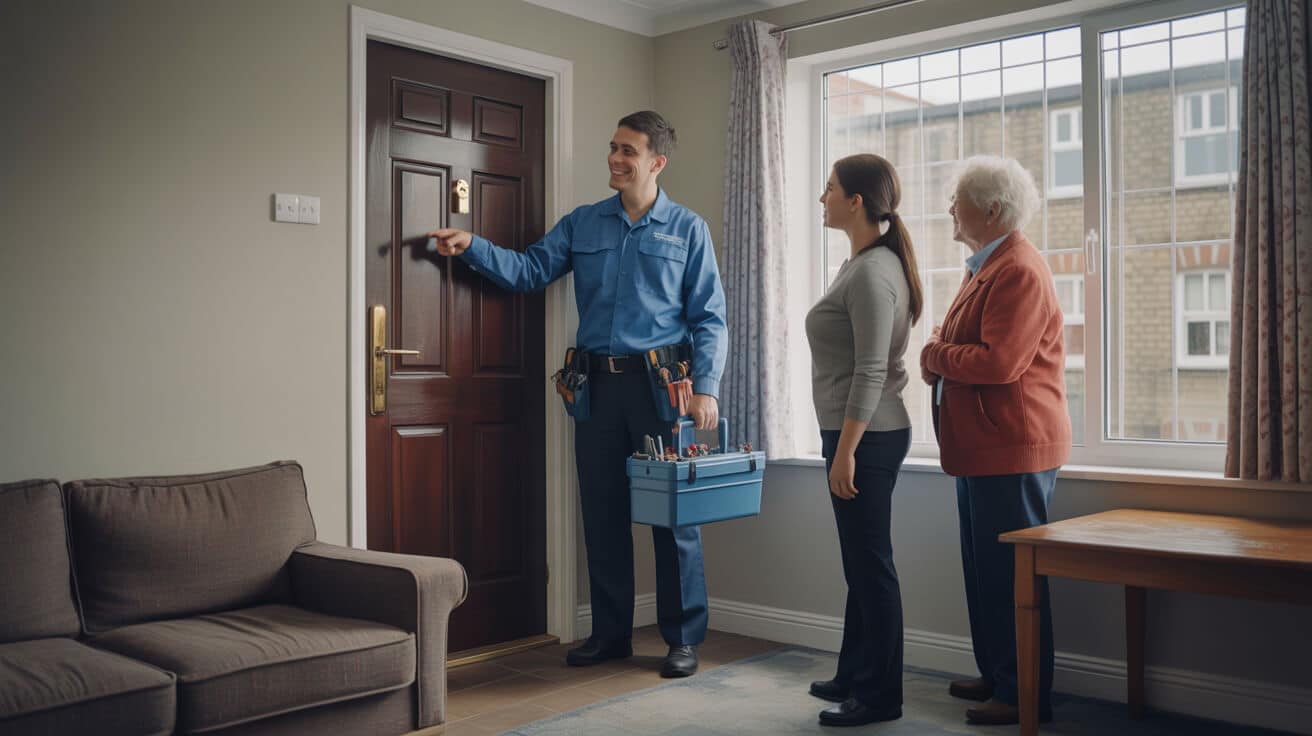
Your key is your last line of defence. Count handovers, collect all spares at move-out, and swap the lock with every new tenancy—no exceptions, no ‘hidden’ extras.
Landlords that track and rotate keys at every tenant change consistently prevent break-ins and deposit disputes (locksandkeyssurrey.co.uk). Digital logs or secure key safes are a smart investment for a calm landlord life.
How Can Tenants Instantly Lower the Risk of Theft?
Temptation is a bigger trigger than opportunity. Hide high-value items from windows, collect packages ASAP, and keep mobile tech out of sight if you’re stepping out.
Packages in plain view or electronics visible from the street make your flat four times more likely to be burgled (mydeposits.co.uk). Out of sight, out of mind—for both you and the opportunist.
What Should Tenants Do the Second Something Feels ‘Off’?
Report problems the moment they show up, not after they get worse. Whether it’s a dodgy door, an odd draught, or a stranger hanging about—document it, flag it, and, if it feels urgent, notify your landlord and, if needed, authorities.
When you act early, you control the storey.
Quick escalation stops headaches now and proves diligence if there’s ever a claim (mydeposits.co.uk).
How to Push for Repairs When a Landlord Drags Their Feet
Stay factual, stay visible. Start with a dated, written message, follow up calmly by phone, then move to official complaints only if ignored. Every step should come with evidence.
“Tenants have legal means when repair requests are left hanging” (gov.uk). Clear, written escalation—never emotion—gets results faster.
Who’s Responsible for Emergency Instructions and Escape Info?
By law, landlords must display clear, current instructions for escape routes and emergency contacts where every tenant can spot them. No sign, no compliance.
Blocks and HMOs must display this information under UK regulation, so insist if it’s missing or out of date (totallandlordinsurance.co.uk). The basics genuinely can save lives.
How Vigilant Do You Need to Be with Entry Points?
Once a month, walk your flat like you’re an outsider. Wiggle locks, check doors for draughts or scratches, and make sure nothing feels loose or out of place.
Checking is a habit, not a hassle.
Statistics confirm that flats with regular checks have far fewer break-ins (arthuronline.co.uk). Don’t just trust a locked door—verify it.
What’s the Secure Way to Exchange Keys Between Tenants and Landlords?
Always swap keys face-to-face and keep a log with signatures and dates. Use certified secure key safes if absolutely necessary. If someone loses a key or anything feels off, replace the lock immediately.
Logs and secure handovers head off insurance or deposit disputes nearly every time (mydeposits.co.uk).
Hacks for Disguising Absence and Outwitting Opportunists
Don’t broadcast routines. Use light timers, collect mail promptly, adjust blinds, and never leave smartphones or laptops on window sills. Prevention is about hiding patterns—not just valuables.
Flats that don’t announce absences visually stay off opportunists’ watch lists (arthuronline.co.uk). Outsmart casual thieves by thinking a step ahead.
Best Practice for Documenting Security Concerns—So You Get Results
Take clear photos, note dates, and store everything digitally. Use email or messaging apps for reporting—it’s fast, timestamped, and leaves no room for confusion.
Documentation protects the person prepared to use it.
Landlords and tenants who keep it tidy get repairs and claims processed faster—and with less fighting (gov.uk). No record, no progress.
How to Escalate Security Concerns—Without the Drama
Deliver every request in writing, make follow-up calls after each step, and if you’re ignored, move up the ladder officially. Emotional outbursts delay outcomes; facts secure them.
Written escalation wins rapid progress—not finger-pointing (mydeposits.co.uk). Structured, polite, relentless follow-up signals seriousness and sharpens focus.
When Should Escalation to the Council or Authority Be Your Next Step?
If the basics—locks, lights, entry systems—aren’t resolved after repeated requests, document everything and contact your local council. Go prepared, present clear facts, and keep the emotion out of your paperwork.
Structure, not shouting, fixes neglect.
Pursuing council help with a well-kept file often forces action where private requests failed (gov.uk). You’ll get heard when you’re orderly.
Which Landlord Upgrades Have the Biggest Payoff—For Safety and Insurance?
Reinforce weak doors, fit high-security locks, and secure every communal entrance—these upgrades raise safety and make insurance claims simpler.
Property reviews show that landlords who upgrade wisely cut both risks and disputes (gov.uk). Don’t wait for a break-in to unlock peace of mind.
Are Your Fire and Carbon Monoxide Alarms Actually Compliant?
Test them monthly, keep logs, and update your contact info right away if tenants change. Ignoring alarms brings more than fines—it can jeopardise lives and legal standing.
Malfunctioning alarms or missing records count as a breach, with penalties for any landlord who fails to provide proof (totallandlordinsurance.co.uk). If it’s not logged, it’s not compliant.
Where Do Compliance Certificates Need to Be Displayed in Flats?
Certificates for gas, electrical, and fire system checks should be publicly visible in communal spaces—no excuses. Tenants should expect to see them; inspectors will.
Missing paperwork not only frustrates residents—it risks voiding insurance or putting a stop to tenancies (gov.uk). Visibility equals credibility.
Why Do Joint Security Reviews Between Tenants and Landlords Work?
Twice a year, schedule a joint walkthrough for every communal system and lock. By tackling these checks together, you build trust, share accountability, and often spot problems long before they turn major.
Security is a team game—not a solo act.
Joint reviews reduce disputes, highlight risks early, and foster a sense of shared ownership over the building’s future (arthuronline.co.uk).
Which Digital Tools Help Streamline Security and Flat Repairs?
Adopt simple tools—maintenance apps, messaging groups, or online docs—that keep everyone in the loop. Instant photos and notifications leave less space for “I never got the message” excuses.
Digitally tracked tasks fix issues 25% faster on average (mydeposits.co.uk). Pick what your residents actually want to use, not the fanciest solution.
Does Tenant Involvement in Safety Drills or Reviews Make a Difference?
It does. Tenants who join fire drills or participate in security audits make fewer mistakes during real emergencies and act faster to report problems.
“Engaged tenants consistently experience fewer serious incidents in drills and actual emergencies” (totallandlordinsurance.co.uk). Practice today sets you up for calm strength under pressure.
What Are the Legal Rules When Installing CCTV and Alarms?
Landlords must announce new CCTV or alarm installations in advance, use prominent signs for every camera, and regularly wipe old footage. Full transparency isn’t a courtesy—it’s a must.
“CCTV is legal if landlords justify the need, inform tenants, and handle the data responsibly” (simplybusiness.co.uk). Trust comes from openness, not just equipment.
How Fast Do Repairs Need to Happen—So Everyone’s Protected?
Emergencies like broken locks or failed entry systems must be fixed same day; everything else should have agreed timeframes and follow-ups. Clear dates mean clear accountability—ambiguity is your enemy.
Locks and alarms always take priority on the repair timeline (arthuronline.co.uk). Don’t guess: confirm it’s sorted, every time.
What Makes Complaint Escalation Fast and Effective—Instead of Frustrating?
Effective escalation is all about strong records—date-stamped photos, message threads, and a concise log of each step. It’s this methodical approach that prompts action—not repeated calls or anger.
“Full evidence files are pivotal for council or ombudsman action” (gov.uk). Annual check-ins catch most problems before complaints ever need to escalate.
Why Do Annual Safety Audits and Certificate Reviews Prevent Chaos?
Hold a thorough check once a year for every key safety system—gas, electrics, alarms—and record the results. Back up each certificate in a digital location, as well as on paper.
Audits and up-to-date records form the backbone of staying both safe and compliant (totallandlordinsurance.co.uk). Expecting the unexpected is your safest bet.
Why Choose Prime Alert – The London Locksmiths for Your Flat or Property Security?
Stop gambling on odds that never favour the unprepared. Work with Prime Alert – The London Locksmiths for:
- Round-the-clock locksmith callouts, lock upgrades, and secure entry solutions:
- Expertise in legal compliance for flats and rental properties
- Customised security improvements for tenants, landlords, and managers alike
- A tune-up for your building’s reputation—thousands across London trust us
Security isn’t a set-and-forget task. It grows from habits, records, and reliable help—day in, day out.
Those who act before trouble strikes are the ones who sleep best.
Frequently Asked Questions
Who is required to secure shared entrances and communal spaces in apartment buildings?
The legal burden falls squarely on landlords to instal and maintain locks, sturdy doors, and working entry systems for all shared areas in apartment blocks. You—whether tenant or property owner—have a direct stake too: regular checks, quick reporting when issues arise, and a no-excuses approach to communal security keep everyone safer. Real security is always a team sport; when tenants and landlords collaborate, weak points are found and fixed before anyone’s at risk.
Shared vigilance in the halls is worth more than cameras that no one monitors.
How do responsibilities break down in practice?
- Landlords: Provide and maintain locks, secure entryways, and adequate lighting; act on fixes without delay.
- Tenants: Report problems promptly, never bypass entry controls, and foster a culture of no short-cuts.
What’s the right response if you notice a security failure or feel unsafe in your building?
The smart move is to document everything that feels off—from faulty locks to unfamiliar faces in the stairwell. Snap photos, save entrance logs if digital, and send a clear, written request to the landlord or building manager outlining the risk and what’s needed to restore your safety. For urgent dangers—like broken fire exits or jammed main doors—spell out the urgency and insist on a 24-hour turnaround. If you’re ignored, escalate with your evidence to your council or environmental health officer. Never wait; decisive action puts control back in your hands.
Confidence starts the moment you act on what worries you—document and speak up.
Steps to strengthen your position:
- Gather time-stamped photos or entry logs
- Write directly to the landlord or agent detailing the impact
- If no progress, reach out to local council authorities
Which lockdown standards and safety obligations must landlords legally follow in apartment buildings?
Current UK housing law makes it mandatory for landlords to fit certified locks on all main entrances and accessible windows, maintain working door entry or intercom systems, and provide operational smoke and carbon monoxide alarms as required by law. In multi-occupancy or larger buildings, expect fire doors, extinguishers, and posted evacuation plans—all checked at intervals. Electrical and gas safety certificates must be renewed annually and available on request. Skimping exposes landlords not just to fines, but forced council-funded repairs and reputational loss.
Snapshot: Legal security essentials for flats
| Safety Feature | Every Building | HMOs/Big Blocks |
|---|---|---|
| Certified locks/intercom | ✔ | ✔ |
| Smoke & CO detectors | ✔ | ✔ |
| fire doors/escape signs | — | ✔ |
| Annual gas/electric checks | ✔ | ✔ |
Which daily practices actually raise your building’s security?
Your everyday behaviours carry as much weight as any lock or alarm. Always close shared doors behind you—never leave communal or fire doors wedged open. Change habits around spare keys; trust a person, never a hiding place. Join building safety briefings, encourage regular self-checks on corridors or entryways, and nudge neighbours when you spot gaps. The most meaningful prevention happens when vigilance turns routine and everyone’s actions set a security standard that even the best technology won’t match.
Security is less about the lock you pick, and more about the habits you keep.
How can daily habits reinforce protection?
- Always secure doors/windows before leaving or sleeping
- Participate in building fire drills and safety meetings
- Use security systems provided—don’t bypass for temporary ease
Which upgrades most improve landlord investment and tenant peace of mind?
Smart landlords invest in anti-snap locks, high-security cylinders, and reinforced frames—these upgrades reduce break-ins and lower insurance costs. Well-placed lighting deters unwanted visitors, and modern CCTV or video intercom systems turn common areas into safer environments. Change locks or codes after every tenancy (it’s too easy to overlook old keys in circulation). Schedule annual reviews of all entrance points, security hardware, and access controls. The best buildings are not just compliant—they’re a step ahead of risk, and that pays off in safety and reputation.
Proven upgrades for maximum impact
- Anti-snap locks and robust, reinforced doors
- Professional CCTV/video intercom with upfront tenant notification
- Annual review and code/lock updates after each tenancy cycle
- Bright, motion-triggered lighting for all external and internal common spaces
How quickly should urgent repairs be handled and what to do when a landlord stalls?
Any failure that threatens resident safety—like a broken entry lock or jammed fire door—should be handled within 24 hours, and leading industry bodies recommend written proof of action with a targeted timeline. If progress stalls, keep written reminders and continue requesting a clear repair date. Document everything: photos, communications, and missed deadlines. If there’s no movement, escalate to the council with your compiled evidence—they can force repairs and apply sanctions. You deserve prompt security, not vague promises.
When safety hangs in the balance, time is a measure of commitment, not convenience.
What’s the escalation pathway if fixes are slow?
- Require a written repair plan and specific dates
- Follow up every 48 hours with new evidence if action is delayed
- Contact council enforcement if landlord response fails
Prime Alert – The London Locksmiths delivers rapid response, certified installations, and security upgrades that shield London’s apartment communities—so you can trust your entrances, every day.