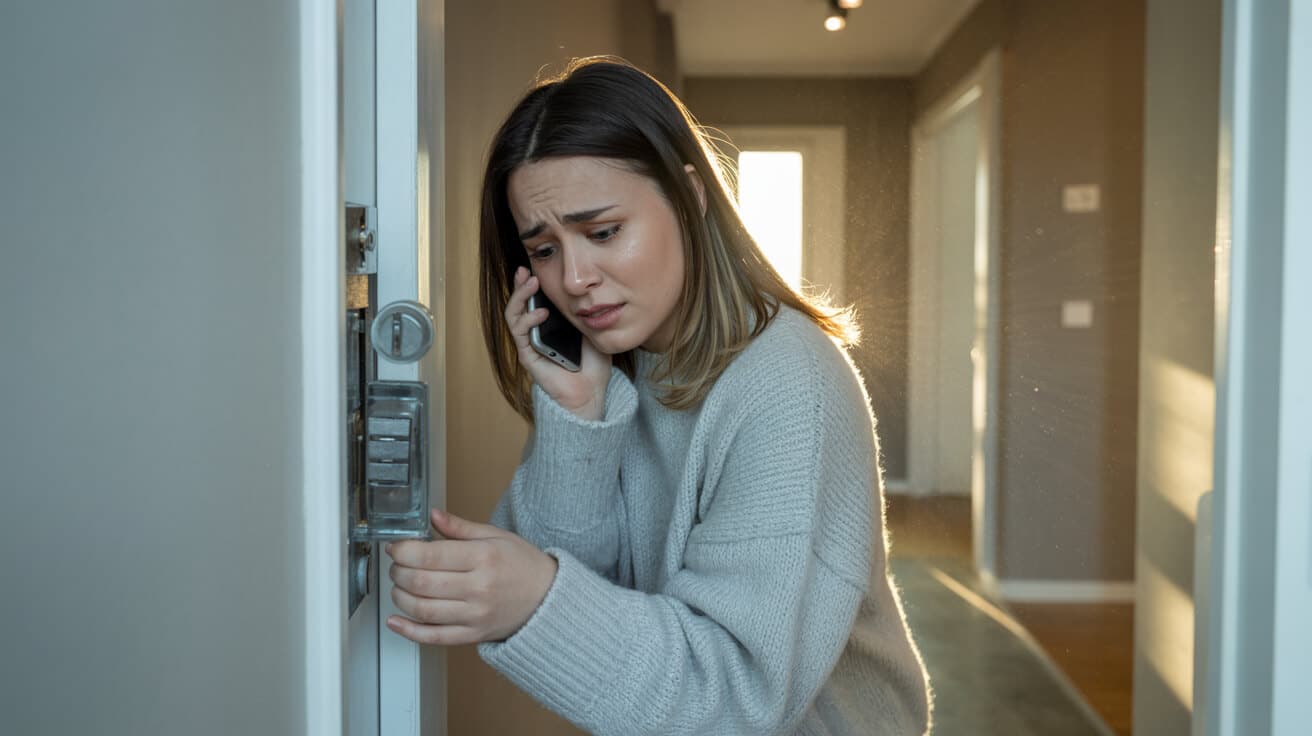
What Is A Nightlatch, And Should I Fit One On My Door
 What Is A Nightlatch, And Should I Fit One On My Door

The Nightlatch—Time-Honoured Security or Quiet Liability?
Every London door tells a storey, and chances are, yours closes each night with the familiar snap of a nightlatch. For many, that nightly “click” is comforting—proof that your home or business is sealed against whatever’s outside. But what if that feeling is built on assumptions that no longer hold true in 2024? A lock that’s always worked may still be quietly outpaced by modern threats and stricter insurance rules.
Some locks sell you peace of mind; only a few can actually deliver it.
Nightlatches win points for convenience—pull your door shut, walk away, and in theory, you’re secure. Yet most insurance policies and professional locksmiths see further. The line between “locked” and “protected” is thinner than it appears, especially if your setup is old, mismatched, or lacking today’s dual-standard approach.
How Does a Nightlatch Work—and Where Does It Actually Fit in Your Security?

A nightlatch mounts on the inside face of your door. When closed, a spring-loaded latch snaps into a keep, locking automatically. Entry from outside demands a key; inside, most people turn a knob. Many models add a “snib”—letting you hold the latch open or deadlock it entirely.
Simple, right? That’s part of the appeal. But not every nightlatch can resist a determined intruder. Lower-spec versions are susceptible to “credit card” bypasses and brute force—leaving your property exposed and your insurance claim at risk if they don’t meet current British Standards like BS3621 (Which? 2024).
A nightlatch can be your home’s first defence, but rarely should it be the last.
Is Auto-Locking a False Sense of Security?

Auto-locking nightlatches are championed for their simplicity—just close the door, and you’re “secure”. Except, classic models are notorious for being slipped open with simple plastic because they’re designed for convenience, not impenetrability. Some newer designs improve the odds, but the value of the “automatic” feature depends entirely on what’s backing it up.
Locking yourself out is frustrating. Allowing a burglar to slip the latch as easily as you—or having an insurer reject a claim due to old hardware—is far worse.
Effortless locking shouldn’t make life effortless for trespassers.
Which Nightlatch Lives on Your Door—And Does It Stand Up Today?

Classic Nightlatch: The Fading Workhorse
Basic spring-latch models—think “Yale with a knob”—were everywhere a generation ago. They provide fast closure, but also quick defeat; burglars know it, and so do insurers, who won’t accept this as your primary defence (Duffells).
Deadlocking Nightlatch: Stronger, but Memory-Dependent
Here you turn a key to “lock” the latch, stopping external bypass. But if you neglect this step in a rush, the extra protection evaporates. Insurance and break-ins favour the diligent user—not those in a hurry.
Auto-Deadlocking Nightlatch: Modern Convenience, Unforgiving Design
Auto-deadlocking latches engage the deadlock every time the door shuts—raising security and the odds of accidental lockouts. If there’s a moment you forget a key or a child is inside, you’ll discover both the upside and downside immediately (Toolstation Guide).
Does a Nightlatch Alone Satisfy Your Insurance?

For most homes or businesses, no single nightlatch—no matter how new—meets core insurance criteria. Nearly every policy in London insists on combining a nightlatch with a BS3621 mortise deadlock. If you’re thinking “my nightlatch has never failed me,” be aware: policies and burglars both update faster than habits.
| Lock Type | Passes Alone? | Passes With Mortise Deadlock? |
|---|---|---|
| Non-deadlocking Nightlatch | ✗ | ✓ |
| Deadlocking Nightlatch | ✗ | ✓ |
| Auto-deadlocking Nightlatch | ✗ | ✓ |
A weighty lock can give you a false sense of protection and still void your claim.
Why Layering Locks Remains the Gold Standard

Pairing a robust nightlatch with a BS3621 mortise deadlock covers both rapid entry locking (nightlatch) and serious anti-force defence (deadlock). This duo satisfies London insurers, police, and security-conscious owners. Each makes up for the other’s weaknesses; together, they tick every box and raise the bar against opportunistic attacks or regulatory lapses.
True security isn’t a device. It’s the habit of mindfully layering your defences.
What If My Door Has Glass or Sits in a Communal Block?

Doors featuring glass panels or sidelights can turn a strong nightlatch into an open invitation—burglars break the pane to reach inside. In shared flats or escape routes, regulations sometimes require quick-release options or limit the use of deadlocks, reflecting the need for both safety and compliance [(Which?)].
For these cases, proper installation and expert hardware selection matter as much as the locks themselves.
Are “Smart” Nightlatches a Real Upgrade or Just a Gimmick?

Modern nightlatches offer more than mechanical upgrades—think anti-drill plates, anti-pick cylinders, “smart” keypads, and smartphone control features. But eye-catching gadgets only count if they’re certifiably secure (look for BS3621 or police approval kits). Insurance doesn’t care for “latest and greatest” if the basics aren’t present, and tech without standards can introduce new risks.
Buying a lock with Wi-Fi or a big brand on the box? Make sure it’s a lock a police officer would trust—not just an app developer.
How Real Is the Risk of Lockouts—and What Should You Do?
Advanced deadlocking and auto-deadlocking make accidental lockouts far more common. You step outside, forgetting your key, and the door deadlocks behind you—now you’re stuck or calling a locksmith. For shared entrances or rentals, losing a spare compounds the risk, especially if children or the vulnerable are inside.
- Keep a spare with a trusted neighbour, key safe, or family member.
- Double-check keys on leaving—especially with newer “auto” models.
- If in doubt, request deadlocks with emergency-release features for safety.
Security must never trap you on either side of your own door.
When Should You Replace a Nightlatch?
Even the best latches wear out. Warning signals for replacement include:
- Latch sticking, jiggling, or not catching cleanly
- Knob or mechanism feels loose
- You struggle to turn the key, or have to wiggle it
- The snib sticks or won’t function smoothly
Ignoring these symptoms doesn’t just raise the risk of break-ins; it can endanger insurance validity—and nobody wants their first warning sign to be after an incident.
Why Trust Fitting to a Pro, Not a “Handyman” Quick-Fix?
Professional installation goes way beyond simple drilling and screwing. It means:
- Reviewing the door and frame for weaknesses
- Advising on the right types, standards, and combinations of locks
- Aligning hardware properly, preventing stress and attack-prone gaps
- Supplying compliance certificates for insurance or regulatory reasons
DIY or handyman shortcuts can invalidate insurance, undermine safety, and turn your property into a soft target—often at the worst possible moment.
Do Business Premises Need a Different Approach Than Homes?
Shops, clinics, and offices must meet a tougher set of standards—higher insurance demands, constantly changing users and staff, and large numbers of people accessing through a single entry. Regulations often require:
- Panic-release and fire-safety options for staff and customers
- Organised systems for key control and employee turnover
- Heavy-duty, high-traffic rated locks with supporting paperwork
If you’re running a company, security isn’t just a tickbox—it’s a foundation for business continuity.
Is Your Old Nightlatch a Liability in 2024?
A decade-old nightlatch may still click closed, but without BS3621 marks or anti-tamper upgrades, it’s outpaced by today’s tools and policies. As insurance and break-in methods both evolve, “still working” often just means “still waiting to fail.”
Yesterday’s lock can become today’s weakest link for an entire building.
Upgrading is less about replacing what’s broken, more about eliminating invisible weak points before they cost you money, time, or peace of mind.
How Do You Choose When and What to Upgrade?
The smart move starts with an audit:
- Does your insurance specify a BS3621 deadlock (nearly all do)?
- Is there glass anywhere near the latch? (If so, upgrade for deadlocking.)
- Can every resident or employee reliably remember their keys?
- Are you limited by fire or building exit codes?
- Are you already fiddling with the key or noticing brand “wear”?
When it’s ambiguous, bring in a qualified locksmith. Prevention is always better than panic, especially when insurance and safety are on the line.
Prime Alert – The London Locksmiths—Trusted Expertise, Unrivalled Peace of Mind
London is an ever-shifting puzzle of rules and risks: Prime Alert – The London Locksmiths offer more than just lock installation. Our team reviews your security as a whole; we recommend and instal only insurance-compliant lock combinations that fit your door, your regulatory landscape, and your future—not just today’s convenience.
- BS3621-certified deadlock and nightlatch pairings
- Residential, commercial, communal, and heritage property covERAge
- Full compliance guidance — from fire escapes to shopfronts
- Ongoing updates as regulations and security standards evolve
The right lock is only the beginning; what matters is the certainty it brings, even before it’s tested.
Rely on a locksmith who protects more than your door—trust them with your peace of mind.
Act Before Risk Becomes Reality—Book with Prime Alert – The London Locksmiths
Don’t gamble your security or insurance payout on fading hardware. Get a thorough security review and see how Prime Alert – The London Locksmiths delivers certified installations, upgrades, and advice that last. The property owners who sleep best tonight are those who acted before they had to.
Call today and take control—trusted in London because no one wants to hope their lock works. Everyone wants to know.
Frequently Asked Questions
What makes a nightlatch unique compared to other locks UK homeowners rely on?
A nightlatch, often known as a “Yale lock,” is fitted on the inside surface of your door and snaps shut automatically each time the door is closed—meaning you never have to double back to lock up. Unlike mortice deadlocks, which are embedded deep within the door and require two turns of a key, or robust multipoint mechanisms standard on uPVC entrances, the nightlatch is designed for speed and convenience. Where it differs is in its vulnerability: a standard nightlatch can be bypassed with simple tricks like card slipping. That’s why professional locksmiths, including Prime Alert – The London Locksmiths, warn that on its own, a nightlatch rarely offers modern security or insurance peace of mind.
Comparing lock mechanisms side by side
- Nightlatch: Instantly locks door behind you, released from inside by knob, key required outside.
- Mortice deadlock: Positioned in the door’s core for higher resistance; locks from both sides with a key.
- Multipoint system: Secures at multiple door points; favoured for composite and uPVC.
The real strength comes from combining these locks, not betting all on one.
Is a nightlatch on its own enough for police and home insurance requirements?
A single nightlatch—no matter how sturdy—fails to meet the requirements set by UK insurers and police for external wooden doors. Most guidance points to a dual-lock approach: at least a BS3621-approved mortice deadlock paired with a nightlatch for your timber doors. This isn’t mere formality. Traditional nightlatches alone can be forced or slipped open in seconds. Prime Alert – The London Locksmiths recommends always checking your door’s setup; an insurance claim denied due to non-compliance is an avoidable hardship.
Burglars look for lonely, stand-alone locks—pairing up makes them move on.
What do insurers and police want to see?
- External timber doors: Must have a BS3621 mortice lock and a nightlatch.
- Standard nightlatch only: Risks failed compliance checks and invalid cover.
When both locks play their part, your security isn’t just better—it’s recognised by your insurer, too.
Will a nightlatch alone satisfy my current home insurance policy?
Almost all UK home insurance underwriters require at least one lock rated to British Standard BS3621 on every external wooden door, something standard nightlatches typically don’t offer unless clearly certified as such. Should a break-in occur with just a non-compliant nightlatch, insurers can legally void your claim. For clarity, inspect your lock for the British Standard Kitemark; if you’re uncertain, a property security review by Prime Alert – The London Locksmiths can prevent both claims rejection and future stress.
Essentials for insurance lock compliance
- BS3621 mortice lock: Universally accepted on timber doors.
- PAS3621 multipoint: Standard for uPVC/composite models.
- Basic nightlatch: Practically never sufficient solo.
Your insurance is only as robust as the locks your paperwork describes.
How does deadlocking improve the safety of a nightlatch system?
A nightlatch without a deadlock mechanism is just a latch; anyone with skill—and sometimes just a plastic card—can push it open. Deadlocking versions, however, let you turn a key and secure the latch so it stays fixed, even if someone tries to manipulate it from outside. Auto-deadlocking models take it further, engaging the deadlock every time the door is closed, reducing human error. This isn’t just extra safety; it’s compliance and modern deterrence combined.
Adding a deadlock is the difference between almost safe and truly locked down.
Upgrade snapshot: nightlatch vs. deadlocking nightlatch
- Standard: Latch can be slipped; easier target.
- Deadlocking: Requires a key to open; immune to “carding.”
- Auto-deadlocking: Instantly locks after every use.
Smart upgrades keep your home ahead of both thieves and insurance minimums.
Can you instal a nightlatch on any door, or are there restrictions?
Nightlatches are made for solid wooden doors, not for uPVC, composite, or hollow doors. Fitting them on unsuitable doors not only invites mechanical failure but may also void your home insurance. Glass panels or decorative timber entries often require double-locking nightlatches to prevent someone reaching in to open the lock from inside. For each door style, Prime Alert – The London Locksmiths assesses fitment to eliminate weak links and maintain insurance standing.
Quick reference: Door compatibility and nightlatch use
| Door Type | Nightlatch Fitting | Security Best Practice |
|---|---|---|
| Solid timber | Yes, with deadlock | BS3621 mortice lock pairing is ideal |
| uPVC/composite | No | Use multipoint system for full security |
| Glass-panelled | With caution | Double-locking version recommended |
Mistaking one door for another can set up the exact gap that modern burglars hunt for.
What are the daily realities of living with a nightlatch—hidden advantages and risks?
A nightlatch lets your door lock behind you without extra thought—ideal for families, house shares, or anyone juggling busy home routines. Modern deadlocking types and smart integrations boost practical use and safety. Pitfalls include accidental lockouts (especially with auto-deadlocking), classic models being forced, and any use on the wrong door risking insurance issues. True peace of mind comes only when your nightlatch partners with a compliant mortice lock. For a reality check specific to your property, Prime Alert – The London Locksmiths can match best of breed solutions to your everyday needs.
- Advantages: Effortless locking, cost-effective upgrades, suits most wooden doors, compatible with new tech.
- Risks: Non-compliant versions leave a gap, wrong fitment voids insurance, auto-deadlocking can lock you out.
The best lock is the one that fits your real-world lifestyle—inside the law, and insurance-ready.
Take the next step by having your entryway checked and upgraded by experts who’ve seen every scenario across London—because your safety shouldn’t be left to chance.