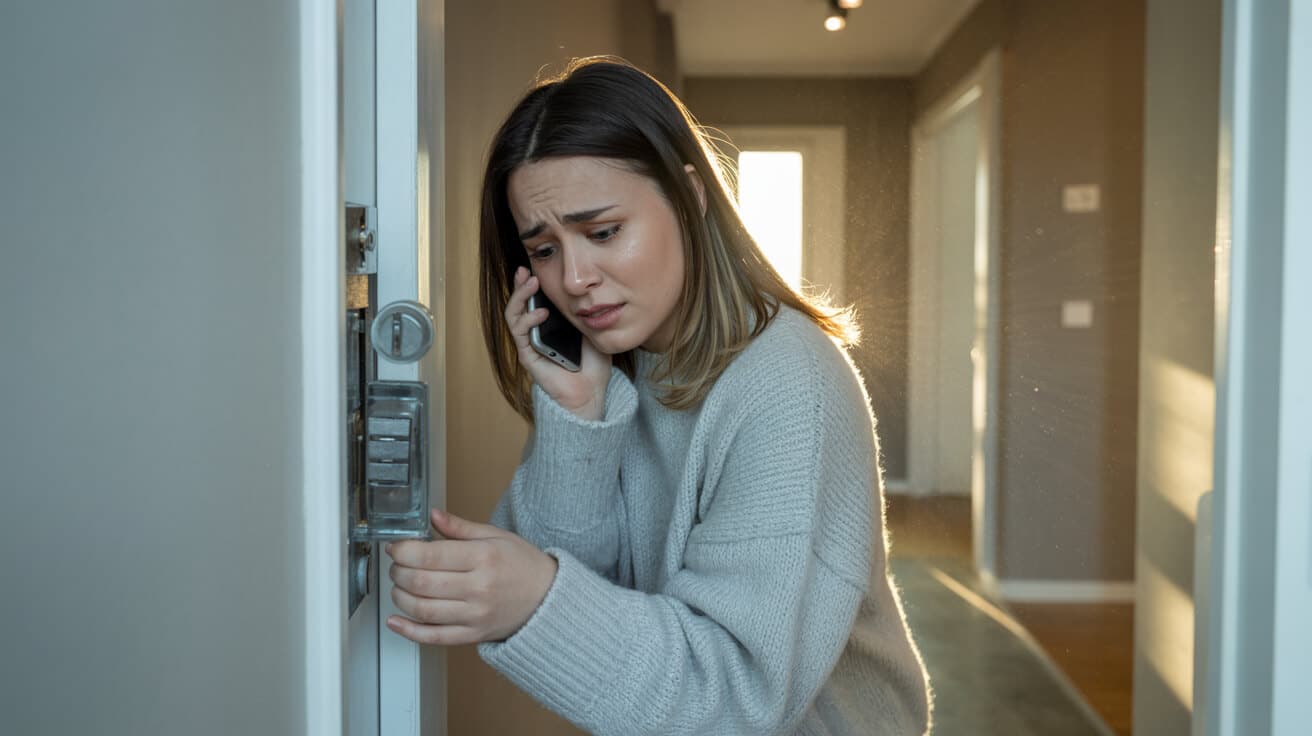
Best (And Worst) Places To Hide A Spare Key
 Best (And Worst) Places To Hide A Spare Key

Where Does a Spare Key Belong? The Hard Truth About Home Security
You can spend a fortune on security systems, but one poorly hidden spare key turns your entire defence strategy into a gift for anyone willing to look. Most intruders don’t arrive with spy gadgets—they come expecting that property owners, landlords, or even office managers are stuck on habits from a decade ago.
The difference between being careful and actually being secure is visible the moment your routine gets tested.
Leave a key under the mat or inside a fake rock and you’re not outsmarting anyone—except, maybe, yourself. Insurance firms call this “gross negligence.” Burglars call it “step one.” Even the best policy can feel like a broken lock after a claim gets denied because your “hidden” spare made their work easy.
Why Do People Still Hide Spare Keys When It Burns Them Later?

If you grew up seeing a spare under Grandma’s planter, it feels harmless to do the same now. Tradition doesn’t make it smart. Nearly every break-in where a spare key is used involves painfully predictable hiding spots—you’re not alone, but you may be setting up a loss.
The “Everyone Does It” Trap
Criminals bank on the fact that you’ll do what everyone else does. In the UK, more than 30% of burglaries draw on keys stashed where family or friends might check first (homebuilding.co.uk). Fake rocks, boots, even dog bowls—if you saw the idea on the internet, so did the people looking to break in.
Security that stops at the door won’t outlast a bad habit by the plant pot.
Insurers Play for Keeps
After a break-in, insurers check how a thief got in, not just what was taken. If a burglar found a key in one of the “usual” spots, expect them to treat your loss as preventable (erieinsurance.com). That’s not victim-blaming—that’s business.
Where Should You Never Hide a Spare Key? (Don’t Be the Example)

Every hiding spot you can picture has already been checked, and probably shared on TikTok or YouTube for extra humiliation. Burglars learn from one another. The more “creative” you think you’re being, the more you’re matching someone else’s mistake.
Under the Doormat or Welcome Mat
First stop, every time—litERAlly a world-wide inside joke in break-in circles. Lifting a mat is easier than casing a window.
Inside a Flowerpot, Boot, or Decorative Planter
Pots and planters look appealing—until you realise their mobility makes them magnet spots for thieves. Every insurance survey lists this as a mistake (erieinsurance.com).
In Fake Rocks or Hollow Ornaments
Manufacturers are creative. So are burglars. If it looks fake or feels off, it is off. Criminals brag about finding keys in the first five minutes (elmerslockandsafe.com).
Mailboxes, Bins, Shoes and Car Gloveboxes
These all scream “I panicked and needed a quick fix.” None of them slow down a methodical thief.
The High-Risk Hiding Spot Quick Table
Review this table before you defend your usual spot:
| Hiding Spot | Break-In Risk | Insurance Response |
|---|---|---|
| Under Mat/Rug | Extremely high | Often denied |
| Flowerpot/Planter | Very high | Unlikely to payout |
| Fake Rock/Ornament | High | Usually denied |
| Bin/Mailbox/Boot | High | Rarely approved |
| Car Glovebox/Boot | Maximum | Denied outright |
There’s nothing unique or clever about a spot if it’s appeared on a YouTube “how to break in” list (vivint.com).
What’s Actually Safer Than Hiding a Key? Tested Alternatives

Security doesn’t end at cleverness—it lives in doing the boring, right thing every time. Reliable access isn’t about shortcuts; it’s about choosing habits and hardware that can stand up to scrutiny.
Someone You Trust (Really Trust)
The best place for a spare is with an actual person—preferably a neighbour, family, or staff member you’d let into your home even when you’re not around. No criminal is scripting against this move.
Police-Rated Key Safes
There is one exception for outside: certified, wall-mounted key safes that meet “Secured by Design” or LPS 1175 standards (homebuilding.co.uk). When bolted into brick, not wood, and kept out of line-of-sight from the street, you’ll have solved for both insurance and actual security.
Trust in the process, not a gimmick—your home deserves better than a party trick.
Forget the Gimmicks
If your “lockbox” came off a novelty shelf or Amazon’s “most clever” list, put it back. Every visible or quick-access gadget undermines everything you’ve invested in locks, cameras, and deterrents.
Will Smart Locks Replace Spare Keys? They Work—If You Work Them

It’s tempting to think technology fixes everything, but new gadgets still require old-school diligence. A smart lock doesn’t erase risk unless you treat codes like you’d treat a physical key.
Digital Lock Security Essentials
- Only buy locks with police or insurance certification.
- Change codes with every guest, tenant, or event.
- Keep backups (batteries, Wi-Fi) current.
- Never share or post access information.
A smart lock’s weakest point is a code you forgot to change (boydsecurity.com).
When’s the Right Time to Change Access? Every Transition

Your home, rental, or business changes hands—access changes with it. Every new keyholder is potential risk unless you have a protocol.
Non-Negotiable Steps
- Update key safe codes or digital locks after every handover.
- Keep written records—who has which access, dated.
- Upgrade gear when better systems hit the market.
You don’t need a new break-in to justify an upgrade. Prevention always pays.
What Do the Pros Do? Industry Practice for Spare Keys

Ask a legit London locksmith and you’ll hear the same: never, ever hide keys outdoors. The only “external” solution is a police-rated safe, mounted securely. Spares are handed directly over—not tossed under a bush or bin. Records are mandatory (elmerslockandsafe.com).
How Should You Handle Multiple Users (Without Losing Sleep)?

Whether it’s a team, a family, or a rotating cast of contractors, secure access needs clear, trackable rules.
Keeping the Chain Clean
- Train everyone on what to do with a lost key or code.
- Audit who holds access—at least monthly.
- Never instal hardware in obvious or visible spots (doorframes, fence posts, etc.).
- Use only hardware with visible police or insurer approval.
- Change all codes when people or roles change.
The more complex your access system, the more you need discipline and clarity.
Why Leaving a Key in Your Car is the Fastest Way to Lose Everything
There’s a reason this gets a category of its own: a spare key left anywhere in your car means a burglar gets access to your home and your wheels in one shot (vivint.com). Two insurance denials for the price of one.
Five Rules for Spare Key Security (That You Can Actually Remember)
Stick to these and you won’t be pulling your hair out after the fact:
- Only use wall-mounted, police-certified key safes.
- Keep every key and safe out of direct and kerbside view.
- Change codes every time people change.
- Never, ever trust a gadget or trick you saw in a viral video.
- Bring in a pro for an annual security audit—complacency kills safety.
Negligence isn’t convenience—it’s a shortcut to regret.
Why Professional Help (Still) Matters
Locksmiths don’t just cut keys and walk away. It’s our job to keep you ahead of shortcuts, complacency, and clever criminals. Consistence, documentation, and real-time upgrades are your only protection against stacking risk.
Prime Alert – The London Locksmiths: Checkatrade-vetted, trusted by London’s property owners, and invested in your peace of mind. If you’re serious about securing your property, stop hoping a shortcut will save the day—book a real security audit or get rapid help with Prime Alert now.
Frequently Asked Questions
Why do so many homeowners underestimate the dangers of hiding spare keys outside?
Most burglars expect you to hide a key nearby. In fact, more than 1 in 4 break-ins in the UK involve a “hidden” key—typically found in minutes by an intruder. Insurance providers often decline payouts if it’s clear a burglar used an outside spare. Your instincts about safe spots—like beneath a flowerpot or under a mat—are shared by everyone, including the people you hope never find them.
Every shortcut in security is already mapped out by someone who breaks the rules for a living.
Hiding a key outside does not just invite theft but could cost you your claim after the fact. True peace of mind demands a better strategy.
What outdoor hiding spots should be avoided immediately?
- Doormats, planters, rain gutters, and decorative rocks
- Metre boxes, mailboxes, or outdoor lighting fixtures
- “Novelty” security boxes sold without recognised certification
Feel safer by removing any stashed keys today; it’s the first step towards real security.
How do certified outdoor key safes provide insurance-backed protection?
A key safe with LPS 1175 or Secured by Design certification delivers what insurers, the police, and responsible property managers want: a tamper-resistant home for your backup key, not another guessable risk. Properly installed into brick with security fixings—and hidden from road view—a certified safe withstands smashing, drilling, and basic theft tools. Major UK underwriters now specifically cite police-vetted safes as the only compliant method for storing external keys.
A strong key safe is silent insurance—ignored by thieves, cherished by your policy.
When you change the code after every guest or contractor, you keep your claim valid and your home protected.
How can you check if a key safe is truly secure?
- Look for official badges (LPS 1175, Secured by Design)
- Ensure the safe’s body is metal, not plastic or resin
- Confirm mounting bolts are drilled directly into masonry
When is it smarter to upgrade to a smart lock over hiding a spare key?
If you want to end the key hiding game, a police-approved smart lock is the step up. You issue digital codes or app-based access to trusted people—then revoke them instantly when you need to. Models with British Standards or Secured by Design approval meet insurer demands and allow you to see who enters at what time, giving maximum accountability.
No lost keys. No old secrets. Just you, in total control—every entry, every time.
Smart locks are ideal if multiple people regularly need access, such as cleaners, dog walkers, or tenants. There’s no risk of a misplaced key ending up in the wrong hands.
What features make property managers and families choose smart locks?
- Instantly add or cancel guest codes via your phone
- Entry log keeps tabs on access history
- Emergency physical key overrides in case of battery issues
- Compatible with smart home systems for added control
Are all lockboxes “safe” for property owners, or are some a liability?
Many cheap lockboxes are not tested to withstand real threats. If you see no LPS 1175 or Secured by Design label, you may have a “dummy” that crumbles under basic tools—a real risk for rental owners and businesses. Mounting matters too: installed on wood or visible from the street, even the best box is left exposed.
Certifications signal to insurers and thieves alike that this home takes security seriously. When your lockbox is robust, out of sight, and the code changed after every guest, you shut down low-effort attacks.
How should homeowners and business owners select a lockbox?
- Demand genuine security badges—skip unbranded web bargains
- Never mount on wood or uPVC; only brick or concrete
- Move the box out of direct sight from the street
- Update the code every time staff or guests change
What hidden habits open up your spare key security to invisible risk?
Forgetting to reclaim keys from a builder, never rotating your safe code, or even keeping a spare inside your car seems harmless—until a routine break, job change, or car theft hands out access. Most people don’t track who really holds keys or codes by the year’s end. Auditing access every quarter turns a soft underbelly into a bulletproof system.
Security gaps aren’t just made—they’re left open by default, day after day.
A quarterly routine of reviewing who knows your codes, changing them, and collecting all unused keys will outsmart threats that never announce themselves.
How can you stay ahead of evolving risks?
- Collect all spares after contractors and staff departures
- Document every key handoff and code in a simple log
- Never store spares in a car, garden shed, or toolbox
How does Prime Alert – The London Locksmiths guarantee your spare key security stays watertight?
Prime Alert – The London Locksmiths works with property owners who want to stop worrying and start leading by example. Our expert engineers vet every lock, fit only police-certified safes and smart locks, and walk you through simple, fail-proof security routines. When you need advice or a rapid response, you get skilled professionals—not just another “installer.” From family homes to managed portfolios, we position your security as a silent strength, not a gamble.
The difference is personal: your keys protected, your reputation as a vigilant owner secured. Get in touch for fast, certified help—and experience the standard that sets the bar for London.