Moving House Why You Must Change The Locks
 Moving House Why You Must Change The Locks

Who Still Has a Key? Why Changing the Locks After Moving Home Isn’t Optional
You’ve just moved into your new London home. Boxes fill the hallway and a sense of freedom settles in—until the thought hits: who else could still waltz through your front door, with a key you never saw? The answer is never as simple as the keyring you got at handover. Old spares lurk in kitchen drawers, forgotten with cleaners or resting quietly with an ex-tenant’s family. Changing your locks is not just a legacy of caution; it’s your shot at actual control, turning “I’ve moved in” into “I’m finally safe.”
The biggest risk isn’t the strangers you imagine, but the familiar keys you never see.
Why Do Old Keys Still Linger Long After You Move?
Most buyers expect every key to be accounted for. Real life’s a mess: research finds UK movers inherit up to seven missing or stray keys per property (Admiral, 2023). That’s a web built from decades of house swaps: neighbours, pet sitters, contractors, and agency assistants may all have copies. In London’s whirl of fast-moving property deals and high tenant turnover, these ghost keys multiply each year.
Don’t Assume “It Won’t Happen With My Place”
Over 100 million house keys are out-of-circulation, unreturned or forgotten, across the UK (Admiral, 2023). Forced entries are a minority—many London burglaries start with “friendly entry”: an old cleaner’s copy, or a builder’s sample never reclaimed. Victims nearly always told themselves, “We’ve got every spare,” until evidence proved otherwise (Security Masters, 2024).
How Do Untracked Spare Keys Put Your Security—and Your Money—on the Line?
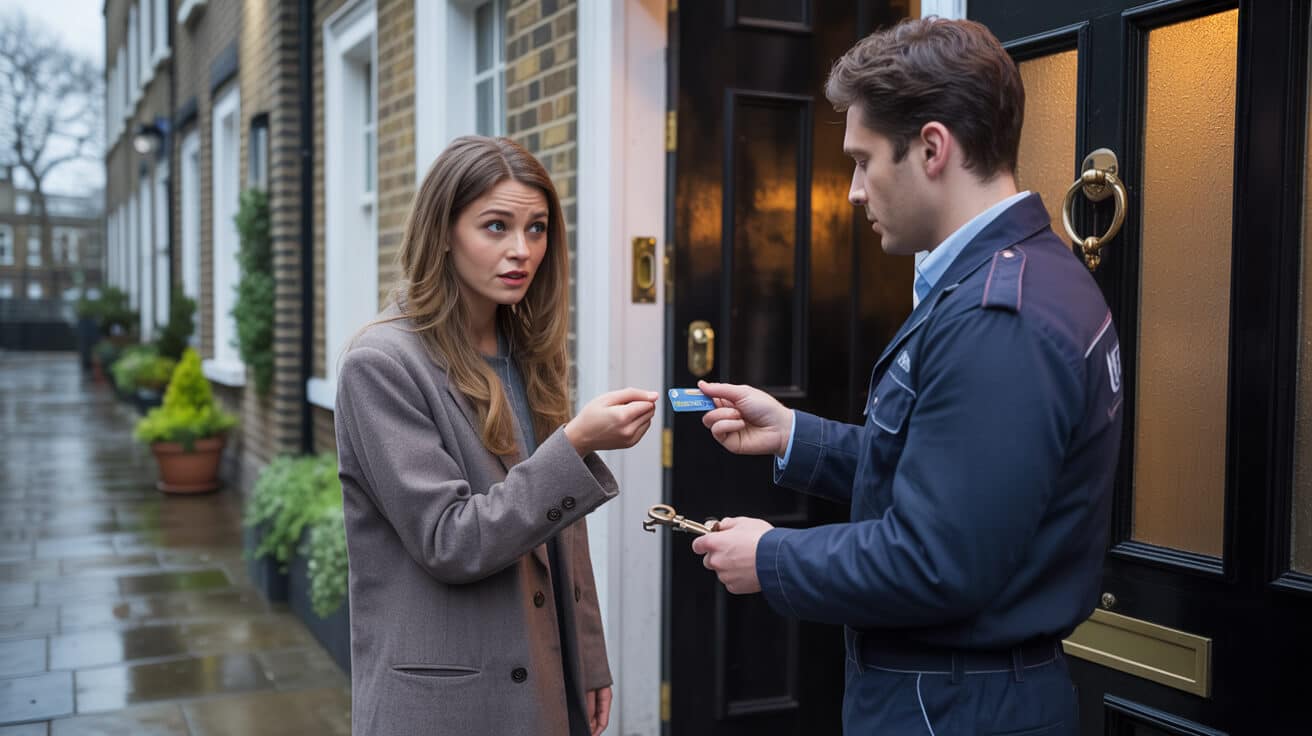
Every extra spare is a silent invitation. Pass the keys to a painter, let a new partner house-sit, loan one to a neighbour—now the chain starts, and links may stretch for years. Even the friendliest sellers can’t trace every set.
Old keys circulate quietly, but your peace of mind pays the price.
Would Your Insurer Pay Up If a Stolen Spare Was Used?
Most insurers require signs of forced entry to accept a claim. If a burglar uses a leftover key, your cover may not count at all (CompareTheMarket, 2024). For Londoners, where home and contents are high-value and policies are strict, that loophole could cost you thousands.
“I Trusted Them” Is Not a Policy Clause
98% of sellers in the UK admit to handing out house keys beyond the immediate family (Admiral, 2023). That “trust” isn’t enough for insurance: unless you have proof your locks were newly changed or re-keyed upon moving, payouts can be contested or denied.
Are Your Current Locks Fit for Purpose, or an Open Door for Survivors of the Last Move?

Not all locks are born equal. Many London homes still rely on cylinders or mortise locks that never hit the British Standard BS3621—the bar insurers demand (MoneySuperMarket, 2024).
Modern criminals rarely pick locks; they outsmart old hardware, or walk in with a misplaced spare.
Could Someone Bypass Your Locks in Seconds?
If your locks predate 2010 or lack the BS3621 mark, they’re vulnERAble to fast exploit tactics like “bumping” or “snapping.” Security assessors constantly flag these as the main risk for new movers. Stick with outdated kit, and you’re making a bet against professional tactics used daily across London.
Why Insurers Demand Certification
Insurance companies expect BS3621 compliance. Lack of it doesn’t just hike your premium; it can void claims completely (MoneySuperMarket, 2024). After a lock change, request written proof of BS3621. Keep it for your insurer.
Why Waiting to Change Locks Gets Costlier by the Day

Moving is chaos: deadlines, boxes, bills. Still, each day without updated locks ramps up your exposure. Lost-key risk multiplies by 10–15% for every 24 hours old locks stay in use after moving in (MoneySuperMarket, 2024).
Regret moves faster than you do—putting off a lock change is an open invitation to bigger trouble.
The Real Damage: Financial and Emotional
If an old key is used for a break-in, your insurance may read that as preventable. Denied claims mean out-of-pocket loss: valuables, electronics, irreplaceable keepsakes—gone. The bigger blow? Learning the fix was simpler (and cheaper) than the cost of inaction.
Quickly Gauge: Are You Gambling?
Ask yourself these before rolling the dice:
- Are you totally sure of who has every key—right now?
- Can you easily prove your locks are BS3621?
- Did you notify your insurer and update your policy?
- Do you hold documentation for every handover and destroyed spare?
Any hesitation? That’s a flashing warning light.
What Happens During a Professional Lock Change? Will It Cause Mayhem?

Worry that upgrades are chaos, expensive, or slow holds many back. But modern locksmiths are about speed and order, not disruption. For most homes, a full security check, lock swap, insurance paperwork, and exclusive key handover takes under 90 minutes—no mess, no waiting.
Peace of mind isn’t an ordeal. It’s clear, quick, and less costly than most think.
What to Expect from a Vetted Locksmith
A certified pro (preferably fully qualified and insured) will:
- Audit every entrance—front, back, garage, windows
- Fit fresh, BS3621-compliant locks (with written proof)
- Hand you a complete set of new keys—no unknown extras
- Supply all paperwork for your insurer or landlord
- Book appointments for evenings or weekends if you need
DIY? Here’s the Real Math
DIY kits look easy, but lack documented fitting by a pro—and many invalidate insurance instantly. A certified locksmith is a one-time spend that pays back: insurance confidence, superior security, certified compliance, and deterrence that spooks would-be thieves.
What Do You Gain—Besides Security—By Upgrading Your Locks?

Replacing your locks isn’t just about eliminating anxiety. It’s about taking full control over your property, your privacy, and even your wallet.
True certainty is knowing that every key to your home answers to you—and no one else.
The Overlooked Upside
- Lower insurance with BS3621 proof—ask your insurer for a discount
- Smoother sales and mortgage renewals with security upgrades documented
- Reduced stress for all new householders—owners and renters alike
- Many locksmiths offer a quick security audit for alarms and CCTV, free with lock replacement
Is It Worth It?
Homeowners are often shocked how affordable professional, insured lock changes are—especially when weighed against the steep cost of a single denied claim.
Extra Warning: When Is Immediate Lock Change Most Urgent?

In big cities, renters, flat buyers, probate inheritors, or shared owners are even more exposed. Layers of tenants, contractors, agents, and staff might all hold “forgotten” keys.
Legal and Compliance Traps
- Agents and landlords must show written evidence of a lock update for every new tenant—verbal assurances mean nothing to insurers.
- In probate or inherited homes, executors must audit all keys and change locks.
- For HMOs, short lets, and company tenants, the rules and documentation are even stricter.
Moving in means a clean slate—unless you leave locks (and your future) up to chance.
Can You Check BS3621 Compliance Yourself?

Look for a “BS3621” stamp or a heart-shaped “house” logo on your lock faceplate. Unsure? Snap a clear photo and send it to a locksmith—most will confirm within minutes.
Free Ways to Prevent Expensive Mistakes
Top-rated locksmiths offer “lock audits”—a fast check on all doors, garages, and windows. They’ll spot any non-compliant locks and quote upgrades—often at zero cost for the audit itself.
Are Smart Locks or Video Doorbells Better Than Traditional Locks?
Smart security is everywhere—apps, PINs, and video at your phone. But insurance and legal protection still depend on certified, standards-compliant hardware.
Digital Gaps That Hurt More Than Help
- Only instal smart devices with the BSI Kitemark or equivalent approval
- Get everything in writing from your insurer before fitting
- Keep all hardware paperwork—future claims will need it
No matter how smart the gadget, only certified work and real documentation protect you if things go wrong.
Five Security Steps to Take Before Your First Night
Don’t wait until stress or a lost item proves “it should have been sooner.” Lock in real protection with this checklist.
Home Mover’s Quick Lockdown List
- Check every lock and window for solid, working hardware
- Look for the BS3621 mark or heart/house symbol
- Register every new key, including spares, and store the record
- Inform your insurer in writing—update them once locks are changed
- Schedule annual security check-ups
A written plan, not wishful thinking, is what shields what matters most.
Biggest “Should Have” Regrets by London Movers
Almost no one regrets caution. But almost everyone who delays a lock change regrets it—after something goes missing or a claim is denied.
The weight doesn’t lift until your security is set, and every key truly belongs.
When Delay Gets You Bitten
Skipping step-one security leads to claim rejection, unnecessary stress, even family disputes. Those who act within days of arrival live with less anxiety—and make their home theirs, instead of carrying the risk of a stranger’s oversight.
How to Pick a Locksmith You Can Genuinely Trust
Google and social feeds are flooded with “experts.” Real pros stand out by qualification, reviews, and rock-solid documentation. Safeguard your home by finding a locksmith who:
- Holds up-to-date, recognised professional qualifications
- Has stacks of genuine, independent 5-star reviews
- Delivers clear paperwork for every instal or upgrade
Prime Alert – The London Locksmiths fits BS3621-certified locks across London, delivers trusted paperwork, and shows up fast—whether you’re in Lambeth, Camden, Islington, or Southwark.
Your First Day, Locked and Loaded: Why Wait? Secure Your Move Now
There’s only one way to guarantee your “fresh start” isn’t built on someone else’s oversights: change every lock, prove every key, and trust your security. Protect your family, your finances, and your future. Book a Prime Alert pro now—London’s fastest, most trusted locksmith service. Your “welcome home” should start with certainty, not doubt.
Frequently Asked Questions
Who could still hold a copy of your keys when you move into a new property?
People you never meet—estate agents, trades, cleaning services, or even previous tenants—often keep spare keys, sometimes for years. A recent UK survey revealed that about one in four movers find out too late that extra keys were bartered, forgotten, or simply misplaced after changing hands (Admiral, 2021). Your home’s comfort depends on knowing exactly who can walk through that door.
You rarely inherit a blank slate—even the locks carry a memory.
Why do unreturned keys slip under the radar?
- Keys are handed out when repairs or sales need speed, not paperwork.
- Owners moving on rarely remember every extra they ever loaned out.
- Rentals, HMOs, and corporate lets see even higher circulation.
What risks arise?
Anyone with a stray copy can re-enter—no forced entry, no warning. Only a full lock change puts certainty back in your hands. Prime Alert ensures all other access ends on day one.
Why could your insurance refuse a burglary claim if you didn’t change locks?
Insurance doesn’t always cover theft if the entry leaves no sign—like a burglar using an old key. Most home insurance policies require either clear evidence of forced entry or proof that locks met the current British Standard at move-in. If locks are old, non-compliant, or simply unchanged, even a genuine loss can be written off as a policy violation—costing you everything (CompareTheMarket, 2023).
When does this hit homeowners?
- When a burglar enters using an unreturned spare.
- If the insurer deems your locks out-of-date or missing BS3621 marks.
What safeguards still count?
A professional, accredited locksmith’s paperwork is heavy with insurers—it proves the job was done to standard, and Prime Alert’s documentation is designed for future claims-proofing.
How do old locks leave your home open to modern break-ins?
Older cylinders and latches weren’t built for the high-pressure tactics criminals now use—lock snapping, bumping, and silent bypass are routine. Recent police figures show “pre-smartphone” cylinders are up to three times more likely to be breached within 30 days of new owners taking over (Metropolitan Police, 2023). For experienced burglars, the absence of a modern lock is an open invitation.
A lock designed for the wrong threat is just a dressed-up weak spot.
Which problems show up most?
- Euro cylinders made before 2012 are notoriously easy targets.
- Absence of anti-snap or BS3621-certified features is all it takes.
How practical is an upgrade?
Modern locksmiths can fit new locks across an entire property in a single visit without disruption—Prime Alert includes compliance as standard, not as an upcharge.
What does British Standard BS3621 actually certify about your new locks?
BS3621 isn’t just a logo—it certifies that a lock was independently tested to withstand advanced drilling, picking, and forced attacks. For your insurance to be valid, most leading UK policies demand that every main entry uses this grade. Many landlords and estate agents make it a line-item contract requirement across London and the Southeast (MoneySupermarket, 2023).
Where and how do you check?
- Look for the heart-and-house or kite mark on your lock’s face—no mark, no certainty.
- Ask your locksmith (Prime Alert includes it) to provide documents and receipts for BS3621-compliant work.
Will compliance cost me extra?
The marginal price difference is usually tiny—much less than the value of insurance cover or lost peace of mind.
How quickly can a locksmith secure your new address after moving day?
An expert can typically assess, strip, and refit a home’s entry points—including front, back, patio, and sometimes garage doors—in 60 to 90 minutes. Prime Alert’s teams are trained to move as fast as the moving van to limit the “open window” when anyone else could walk in. Every lock, every spare, and every compliance form is ticked off before you’re finished unpacking your first box.
What’s the step-by-step?
- Comprehensive check of every entrance, not just the high-traffic doors.
- Removal and disposal of all old locks and untracked keys.
- Installation of new, certified cylinders and matching paperwork for your files and insurer.
- Immediate, actionable advice on aftercare.
That first secure click of a new lock is when moving in really starts.
DIY or professional?
For insurance and liability, self-fit is rarely enough—accredited documentation is your only rock-solid record.
What do most homeowners learn the hard way if they delay changing the locks?
Anxiety doesn’t show up on the keyring, but it creeps in when a contractor, landlord, or previous tenant suddenly reappears—or worse, when an insurance claim gets denied. Many families realise too late that waiting even a few weeks left them exposed, or voided their policy without warning (Security Masters, 2023). The relief of instant action always outweighs lingering doubts.
Typical real-world regrets:
- Old spare found in the hands of a tradesperson months after move-in.
- Insurance claim shut down over “no sign of forced entry” after a theft.
How do experienced movers sidestep the trap?
They schedule a lock replacement before the dust settles, documenting compliance from day one. Prime Alert turns your new keys—literally and legally—into your own.