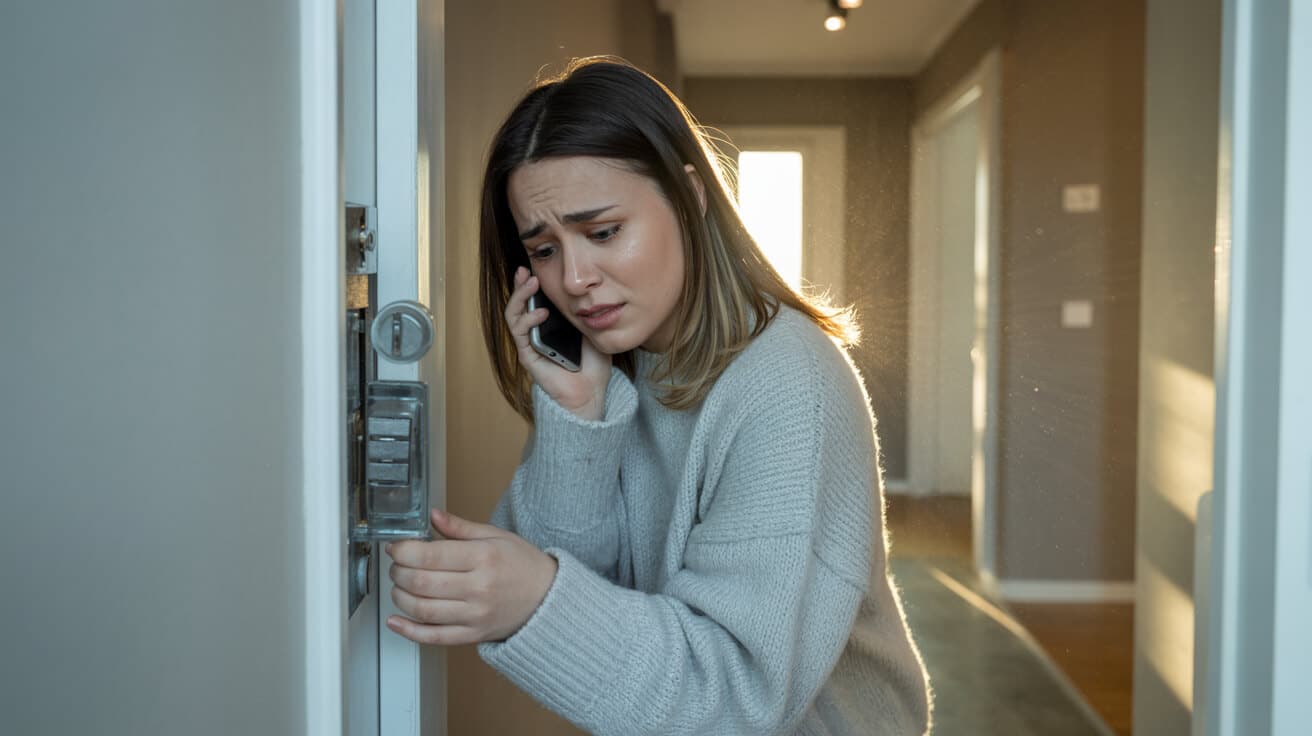
What Is A Deadlock And Why Is It More Secure
 What Is A Deadlock And Why Is It More Secure

How Much More Secure Is a Deadlock Than a Standard Lock?
Every lock claims to protect your property, but a deadlock is the gold standard that actually delivers when it matters most. If you’re looking to keep your home, flat, or business secure—and your insurance valid—a standard lock isn’t enough. Only a true deadlock is designed to beat today’s burglary tricks and meet the strict standards that construction, landlords, and insurers demand.
Plenty of doors look secure. Only a proper deadlock actually is.
Deadlocks force would-be intruders to rethink. While many locks can be manipulated in seconds, a British Standard deadlock (BS3621) stalls even experienced burglars—making your property a risk not worth their time. For your peace of mind and your claim’s approval, nothing matches the reliability of a professionally fitted deadlock.
What Sets a Deadlock Apart From Other Lock Types?
A real deadlock (specifically, the 5-lever mortice deadlock) requires a physical key to lock and unlock it—on both sides of the door. There’s no thumb-turn or internal handle to grab. This means common break-in tactics—like reaching through windows or letterboxes to twist a knob—don’t work.
With standard locks, burglars can slip tools or even coat hangers inside, quickly turning the handle and walking in. A deadlock’s bolt won’t budge unless you have the matching key. That alone defeats countless burglar tricks.
No key, no entry. Deadlocks close off shortcuts that generic latches can’t.
A deadlock is fundamentally different from a typical nightlatch or single-keyed deadbolt because it can only be opERAted with a key from both sides, closing off easy exploit routes for burglars and requiring force or technical skill to bypass.
Why Do Insurance Companies Require Deadlocks?
Insurers in London and across the UK won’t pay for burglary claims unless your doors meet certain standards. That means:
• Main external doors fitted with BS3621 mortice deadlocks
• The lock professionally installed—DIY usually isn’t accepted
If your lock doesn’t have “BS3621” engraved or lacks the kite mark (the British Standard symbol), you can be left out-of-pocket after a break-in—even if the rest of your security is solid (Which.co.uk).
Premiums are high because claims for poorly locked properties are common. A deadlock protects you twice: stopping theft, and keeping your insurance valid.
Every year, countless claims are denied because the lock wasn’t certified or correctly installed.
What Really Happens During a Break-In Attempt?
Most burglars target the easiest entry point. With basic locks:
- They card or “loide” the latch (using a plastic card to slip back spring-loaded bolts)
- Reach in through a smashed window or letterbox to turn the handle or thumb-turn
- Drill the lock cylinder or force the mechanism (especially on low-grade hardware)
A BS3621 deadlock disrupts this checklist. The bolt can’t be slipped, there’s nothing to turn inside, and the five-lever (or better) design is pick- and drill-resistant. This moves your property from “easy target” to “next door is easier.”
Can All Doors Have Deadlocks?
Deadlocks are the premium choice for solid timber doors that are at least 44mm thick—the classic front door of many London homes and countless businesses. However, modern uPVC and composite doors are different; for those, insurers usually require a multi-point locking system—a different beast, but also designed to resist attacks (lathamshardware.co.uk).
For every property, there’s a compliant solution. Get it wrong, and both your safety and paperwork are at risk.
Do Smart Locks Replace the Need for a Deadlock?
Smart locks offer convenience: remote control, one-time codes for tenants, and tracking. But insurers (and even police) still demand the old-fashioned strength of a BS3621 deadlock for main doors. Think of a smart lock as a bonus layer—not a replacement—for serious security and certificate-proof compliance.
How Can You Check If Your Property Is Secure Enough?

- Is your main door timber and at least 44mm thick?
- Do you have a mortice lock that requires a key inside and out?
- Is “BS3621” or the kite mark visible on the lock faceplate?
- Was your lock fitted by a reputable locksmith—and can you prove it?
- Do you have spare keys in a police-approved key safe, not under a mat?
Missing even one step means extra risk—and likely insurance trouble.
Get proof from your locksmith. Claims fall apart without it.
Is Upgrading Worth It If Your Lock Isn’t BS3621?

If you’re renting, renewing insurance, noticing rust, or can’t find certification on your lock, it’s time. The cost of not upgrading is often a denied payout—plus the pain of managing a break-in aftermath.
What Actually Makes a Deadlock “High Security”?

Genuine BS3621 deadlocks come with five levers (or more), anti-pick and anti-drill features, plus a solid steel bolt that’s built to endure force. Don’t be fooled by cheap lookalikes sold online; only certified brands and documented installations fully protect your claim and your people.
Look for five levers, anti-tamper protections, and a visible British Standard mark. Anything less is a weak link.
How Should You Combine Locks for Real-World Use?

The best practice for London homes and businesses: use a standard latch or rim lock for daytime coming-and-going, and lock the deadlock for overnight or when the property is empty. This gives you daily convenience and maximum protection (plus compliance) when you need it most.
Does a Deadlock Make Life More Difficult?

Some worry about deadlocks causing lockouts. That’s why backup plans matter:
- Share a key with someone you trust
- Use a high-quality, police-approved outdoor key safe
- Have a trusted locksmith on speed dial
A little preparation saves headaches—and expensive callouts.
Can Deadlocks Ever Be Too Secure?

Fire codes matter. Never instal a double-key deadlock on a designated escape door or in locations where a fast exit is needed. Let a professional handle the assessment—getting it wrong risks both your safety and legal compliance.
Table: Comparing Common UK Door Locks

Here’s how major options stack up for most London properties:
| Lock Type | Main Use | Insurance Level |
|---|---|---|
| Deadlock (5-lever) | Timber external doors | High (BS3621) |
| Deadbolt (thumb) | Interior/timber doors | Medium |
| Multipoint | Upvc/composite doors | High (BS EN) |
Deadlocks cover the main entry for classic doors; multipoint is a must for modern materials.
How to Audit Your Door—Quick Checklist
- Timber and over 44mm thick?
- Key needed both sides?
- BS3621 or kite mark present?
- Professionally fitted and paperwork on hand?
Don’t bet your insurance pay-out on guesswork—paper trails win every time.
If any answer is “no,” you risk both theft and rejected claims.
What’s the Fastest Way to Upgrade to Deadlocks That Insurers Approve?
Bring in professionals who know both local building codes and insurance fine print. Trusted locksmiths fit the right lock for your property, issue written certification, and keep records for your peace of mind. Don’t gamble with DIY or generic handymen—one mistake can cost thousands.
Your Next Move: Secure Your Legacy and Peace of Mind
Take action before an emergency. Reach out for a security audit or deadlock upgrade by certified experts.
Prime Alert – The London Locksmiths fit BS3621 deadlocks the right way—quickly, with full documentation and no surprises.
Your business, your home, your tenants deserve proven protection—not just hope. Call now for a fast, compliance-ready upgrade that shuts out thieves and stress for good.
Frequently Asked Questions
Why do insurers and police insist on deadlocks for secure property entry?
Deadlocks create a level of resistance that casual burglars simply avoid. Unlike latches or thumbturn bolts, a true deadlock demands a key both inside and out—no reaching through a window, no clever tools through the letterbox. That’s why London insurers and the Metropolitan Police consistently recommend these certified locks: they interrupt quick break-in tactics and dramatically raise the effort required to gain entry. Recent crime prevention analyses show that doors fitted with BS3621 deadlocks have a significantly lower rate of forced entry, and insurance data reveals claims are less likely to be denied when deadlock documentation is in place.
“The right lock doesn’t just slow down threats—it motivates them to move on before they ever try.”
How does deadlock usage impact insurance premiums or payouts?
- Properties with approved deadlocks may enjoy lower premiums.
- Documentation of BS3621 deadlocks routinely simplifies claim approval after loss events.
What technical and compliance advantages does a BS3621 deadlock offer over standard deadbolts?
A BS3621 deadlock goes beyond the basics: it’s been attack tested, survives drilling, picking, and brute force, and crucially, lacks any thumbturn mechanism that can be manipulated from outside. This lab-validated certification means your door lock stands up to both technical burglars and strict insurance contracts. In contrast, many deadbolts without the kite mark leave a loophole that’s easily exploited or rejected by insurers. Londoners seeking peace of mind are now advised by experts and industry literature to treat ordinary deadbolts as an “almost” solution—not the real deal.
How do experts verify deadlock compliance on-site?
- Checking for the engraved BS3621 kite symbol and unique lock number.
- Cross-referencing the model in British Standards directories or with your locksmith’s certification.
When must landlords, homeowners, or businesses upgrade to BS3621 deadlocks by law or contract?
If your external door is timber—and especially if you rent out property or have a mortgage—deadlocks with a BS3621 rating are an industry baseline in London. Many residential and commercial policies refuse coverage, or pay reduced claims, for losses where non-conforming locks were in use. Local authority housing and insurance regulations have tightened: after a break-in, inspectors often ask not “was there a lock,” but “can you show current, BS3621 compliance?” For growing numbers of properties, that’s now a legal and financial minimum—not a suggestion.
“Being almost compliant never satisfied an insurance auditor or a determined burglar.”
Who is most at risk of non-compliance?
- Landlords covering multiple flats or HMOs.
- Homeowners remortgaging or updating policies.
- Businesses in regulated sectors (retail, pharma, finance).
Why shouldn’t every external door use a deadlock—and what’s the right alternative?
Deadlocks aren’t for every door or user. Key-both-sides models are prohibited on fire exits, and can pose safety hazards for families with young children, elderly, or mobility-limited occupants. For those settings, BS8621 locks—keyed outside, thumbturn inside—deliver both insurance compliance and fast exits in emergencies. Modern security setups often combine certified deadlocks on primary doors with nightlatches or lever handles elsewhere, fitting the real risks and daily needs of the people inside.
What are the primary safety or legal exceptions?
- Doors designated as emergency routes (per fire regulations).
- Flats or homes with vulnerable users prioritising quick egress.
How do you keep your deadlock fully insurance-recognised year after year?
Check for visible BS3621 markings and store all installation paperwork from accredited locksmiths where you can reach them instantly—tenancy changes or claims audits hinge on this evidence. Avoid hiding spare keys around your property; instead, use a code-secured key safe or trusted offsite contact. Be proactive with lock maintenance: address any sticking, slow operation, or lost keys swiftly. Whenever you update or repair the lock, get new documentation that matches your address and installation date. Keeping perfect records not only speeds claims but proves you value real, year-round security.
“A secure door means little if you can’t prove you planned for the worst. Own your compliance.”
What habits protect insurance status?
- Annual checks for lock wear and documentation consistency.
- Immediate paperwork updates after tenant or key changes.
- Quick consultation with a locksmith after any security alert.
How does Prime Alert – The London Locksmiths streamline deadlock compliance for London properties?
Prime Alert – The London Locksmiths is built around helping you avoid claim headaches and compliance disputes. Our team conducts expert door assessments, instals BS3621-rated deadlocks that insurers and police trust, and leaves you with bulletproof documentation right at the finish—no form chasing, no grey areas. From tailored lock recommendations to emergency repairs that won’t break compliance, our priority is giving Londoners the assurance their protection withstands an insurance review or unfortunate event. When it’s time for upgrades, audits, or help after a break-in, you get rapid, expert service—so your defences (and records) are never left to chance.
Why choose Prime Alert for long-term property confidence?
- Full spectrum: compliance, installation, lock and key management, instant paperwork.
- London-focused knowledge—anticipating local authority and insurer demands.
- Fast response and nothing left to interpretation on your security trail.