

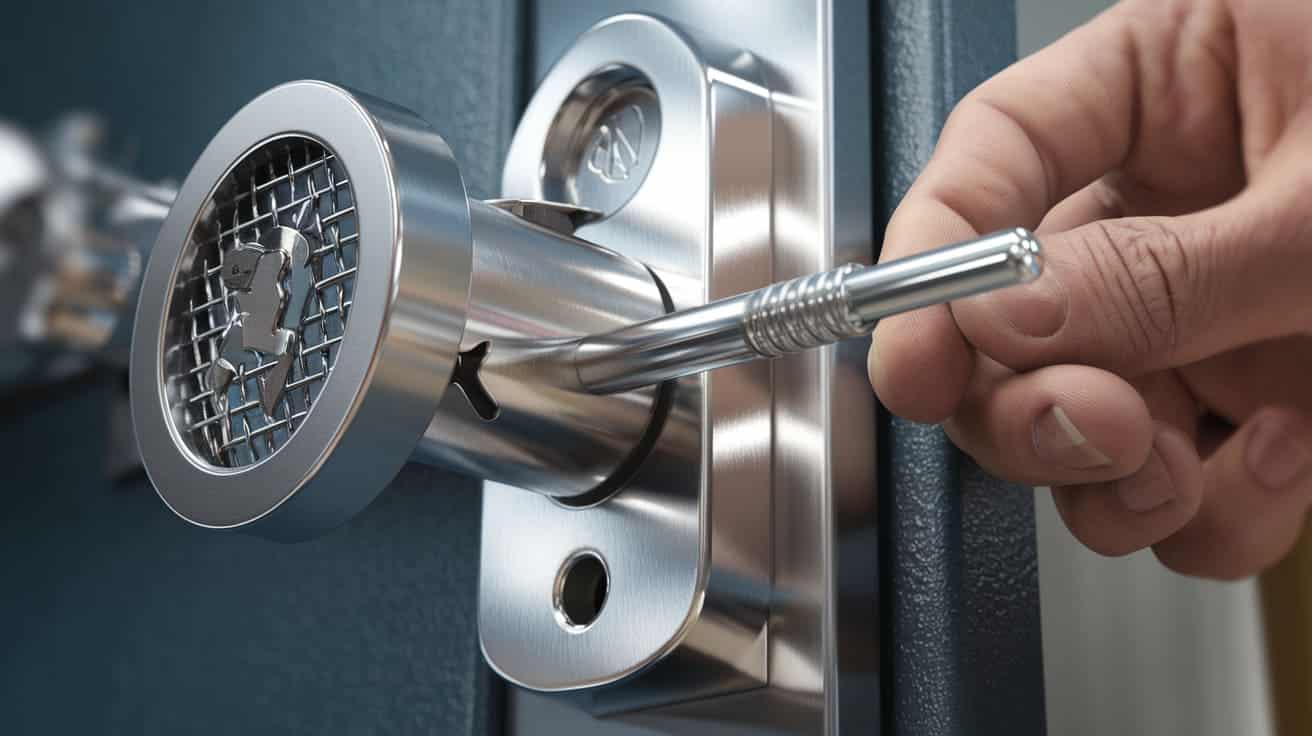
BS EN 1303 Cylinder Security is a European standard that specifies the performance and testing criteria for cylinder locks used in mechanical security systems. It establishes a technical framework for evaluating locks, ensuring they offer robust resistance to various forms of physical attack and environmental degradation.
Scope and Purpose
BS EN 1303 was developed to harmonize security testing procedures across the European market, ensuring that cylinder locks adhere to uniform benchmarks. The standard:
- Defines Measurement Protocols: It details test methodologies such as impact resistance, drill and pick resistance, and environmental conditioning tests.
- Establishes Performance Metrics: Manufacturers are required to meet specific load, stress, and durability thresholds, which guarantee that the lock will remain effective under both normal and adverse conditions.
- Enhances Security Assurance: By setting rigorous criteria, the standard aims to improve the ovERAll safety of properties through reliable, high-grade cylinder security.
The standard applies to a wide range of locks used in residential, commercial, and institutional settings; its detailed guidelines are integral for manufacturers, inspectors, and regulatory bodies in evaluating lock performance and ensuring compliance with modern safety requirements.
Development History
The history of BS EN 1303 Cylinder Security is intertwined with the evolution of mechanical locking systems and the growing need for standardized testing in the security industry. Early security devices were developed without a unified regulatory framework, often resulting in inconsistent performance levels. Over several decades, the industry recognized the necessity for rigorous, consistent standards that could reliably gauge the security aspects of cylinder locks.
Historical Context
- Pre-Standard Era: Before the inception of BS EN 1303, numerous regional standards existed, such as BS EN 12209, which inadequately addressed the comprehensive spectrum of cylinder vulnerabilities.
- The Emergence of a Harmonized Framework: In response to increasing security threats, particularly against high-value assets, regulatory bodies collaborated to develop a standard that could serve as a reliable benchmark across Europe.
- Iterative Improvements: Since its introduction, BS EN 1303 has been periodically updated to incorporate innovations in lock design, advances in testing technology, and enhanced understanding of security risks. This iterative process has ensured that the standard remains relevant in the face of evolving attack techniques and environmental challenges.
Evolution of Testing Methodologies
The development of BS EN 1303 marked a significant shift towards embracing scientifically rigorous test procedures. Investigations into real-world attack vectors led to the inclusion of various stress tests and simulated conditions. As lock technology advanced, new parameters, such as resistance to drill attacks and environmental aging, were integrated, ensuring that the standard continually reflects current security needs.
Structure of the Standard
BS EN 1303 is meticulously structured to cover multiple critical aspects of cylinder lock performance. The document is divided into sections that address different facets of lock security, ensuring that every element of performance is evaluated with precision.
Organizational Layout
- Testing Procedures: Detailed descriptions of the various tests that locks must undergo are provided in this section. These include:
- Impact Testing: Simulates forces that may be applied during attempts at forced entry.
- Drill and Pick Resistance: Evaluates the lock’s ability to withstand mechanical manipulation using specialized tools.
- Environmental Testing: Replicates long-term exposure to varied conditions such as extreme temperatures and humidity.
- Performance Metrics: Specifications define the acceptable thresholds for each test, such as maximum load capacity and failure points.
- Classification and Grading: Locks are graded based on their ability to meet or exceed the defined performance benchmarks. This categorization assists in the selection and procurement of locks for different applications.
- Material and Quality Standards: Guidelines are provided regarding the materials used in construction, emphasizing the importance of high-quality alloys, precise engineering, and protective coatings.
Detailed Testing Protocols
The testing protocols included in BS EN 1303 are based on standardized laboratory procedures that aim to replicate real-world conditions. These protocols ensure that:
- Load and Stress Testing: Cylinders are subjected to controlled forces until measurable deformation or failure occurs, determining their durability.
- Impact Resistance Evaluations: Tests measure the energy absorbed by the cylinder upon impact, indicating its robustness against blunt force.
- Drill and Pick Resistance: Procedures simulate skillful lock picking and drilling attempts, ensuring that the lock can resist sustained attempts at unauthorized entry.
These methodologies are designed to provide an objective basis for assessing lock security, making the standard a cornerstone in the field of mechanical security.
Key Definitions and Metrics
Understanding BS EN 1303 requires familiarity with the technical language and metrics it employs. This section defines the core terms and measurement criteria that underpin the standard.
Core Definitions
- Cylinder Security: This term refers to a lock’s inherent ability to resist attacks such as tampering, drilling, and picking. It is a composite measure reflecting both material strength and design ingenuity.
- Anti-Tamper Measures: Features incorporated into lock design to deter or delay unauthorized manipulation. These may include specialized pins, reinforced housings, or integrated alarms.
- Load Testing: A methodology to determine how much force a lock can sustain before failure. The results provide insights into the lock’s mechanical resilience.
Performance Metrics
- Impact Resistance: Measured by the energy required to induce damage or permanent deformation in the lock’s structure. High resistance indicates a robust design.
- Drill and Pick Resistance: Quantified through controlled experiments that simulate common lock picking and drilling techniques. The outcome is measured in terms of the time taken to breach the lock or the force applied.
- Stress and Failure Thresholds: These values represent the maximum stresses that a lock can tolerate under controlled conditions without compromising its integrity.
- Environmental Durability: Metrics include susceptibility to corrosion, thermal degradation, and other factors that may affect lock performance over an extended period.
Quantitative Assessment
Manufacturers are required to conduct rigorous tests in certified laboratories, and the results are documented in detailed test reports. These reports provide a quantitative basis for assigning grade levels and meet the requirements of certification bodies, ensuring that only products meeting the highest performance metrics are commercially available.
Application and Use Cases
BS EN 1303 Cylinder Security is employed across various sectors, where its stringent criteria enhance the reliability and safety of locking systems. This section explores how the standard is applied in diverse scenarios.
Residential Settings
In residential applications, cylinder locks that comply with BS EN 1303 are crucial for providing enhanced protection against unauthorized access. Homeowners benefit from:
- Improved Break-In Resistance: The high-performance criteria reduce the risk of forced entry, offering added assurance for property security.
- Increased Durability: compliance with the standard ensures that the lock maintains its integrity over extended periods, reducing the need for frequent maintenance.
- Cost-Effective Security Solutions: By choosing products that meet BS EN 1303 requirements, property owners may also experience lower insurance premiums and increased property values.
Commercial and Institutional Environments
Commercial properties, such as office buildings, retail stores, and public institutions, require lock systems that offer consistent performance under high usage. In these settings:
- Security Reliability: Facilities managers depend on BS EN 1303 compliant locks to ensure that heavy traffic and operational demands do not compromise security.
- Regulatory Compliance: Many commercial buildings must adhere to specific building regulations that mandate the use of certified locks. BS EN 1303 provides a benchmark that facilitates this compliance.
- Enhanced Safety Protocols: Public institutions and governmental buildings often face heightened security risks, making the advanced testing and grading provided by the standard critical to maintaining safety.
Integration with Advanced Security Systems
Modern security strategies often involve a multi-layered approach where mechanical locks are integrated with electronic access control, video surveillance, and alarm monitoring systems. In such configurations:
- Complementary Functionality: BS EN 1303 compliant locks operate as a robust first line of defense within a broader security ecosystem.
- Seamless Incorporation: The standardized performance metrics enable these locks to merge effectively with other systems, ensuring coordinated security measures.
- Operational Efficiency: The reliability of cylinder locks enhances overall system performance, contributing to reduced maintenance needs and improved system resilience.
Practical Examples in Diverse Settings
Consider the following scenarios:
- Residential Complexes: A property manager replaces outdated locks in a high-rise apartment building with BS EN 1303 compliant devices, achieving a quantifiable reduction in break-in rates and improved tenant satisfaction.
- Commercial Offices: An office building integrates these high-security locks as part of its comprehensive access control system, meeting both safety regulations and operational efficiency targets.
- Institutional Facilities: A school district mandates the installation of BS EN 1303 certified locks in all school buildings, ensuring that sensitive environments receive the highest level of security assurance.
BS EN 1303 is one part of a broader framework of security standards designed to evaluate and enhance lock performance. Understanding its nuances requires comparing its criteria and methodologies with related standards.
The landscape of lock security standards includes other benchmarks such as:
- BS EN 12209: Focuses on traditional lock mechanisms with a broader yet less stringent approach to performance.
- TS007: Emphasizes specific aspects of cylinder locking but features a narrower focus in its testing procedures.
Key Differences and Similarities
- Testing Rigor: BS EN 1303 mandates extensive testing protocols that simulate a wide array of attack vectors, including impact, drill, and pick resistance, in contrast to related standards that may focus on fewer performance aspects.
- Grading Systems: The standard’s nuanced grading system allows for finer differentiation between products, thereby informing more precise product selection based on specific performance criteria.
- Material and Process Specifications: While both BS EN 1303 and similar standards require high-quality manufacturing standards, BS EN 1303 incorporates additional requirements for environmental durability and long-term performance.
Comparative Performance Metrics Table
| Metric | BS EN 1303 | BS EN 12209 | TS007 |
|---|---|---|---|
| Impact Resistance | High; measured through simulated impact | Moderate; less comprehensive testing | Focused on specific attack forms |
| Drill Resistance | Extensive; includes multi-cycle drills | Limited to initial resistance | Emphasizes drill resistance |
| Load Testing | Detailed load and stress thresholds | Basic load measurements | Specialized, but narrow scope |
| Environmental Durability | Includes long-term exposure tests | Not explicitly covered | Minimal consideration |
| Grading Detail | Fine-grained classification | Broader tiers | Focused on categorical performance |
These differences highlight why BS EN 1303 is increasingly regarded as the benchmark for high-security cylinder locks, enabling both precise evaluation and improved consumer confidence.
Industry Adoption
The widespread adoption of BS EN 1303 has had a transformative impact on the lock manufacturing and security sectors. Its influence is evident in multiple facets of industry practice.
Manufacturer Practices
Leading manufacturers integrate BS EN 1303 into their product development cycles to ensure that every lock produced meets stringent performance criteria. Notable industry players such as Yale, Mul-T-Lock, ASSA ABLOY, and Chubb routinely incorporate the standard:
- Design Improvements: Engineering teams focus on incorporating advanced anti-tamper features and precision manufacturing techniques.
- Quality Control Systems: Enhanced testing protocols and regular audits ensure compliance, reinforcing the reputation of brands that adopt the standard.
- Innovation in Materials: Manufacturers invest in new materials and optimized design processes to achieve greater resilience and longer service life.
Market and Consumer Impact
Adoption of BS EN 1303 has also influenced market dynamics:
- Consumer Trust: Products that adhere to the standard often enjoy a higher level of trust, as rigorous testing and certification serve as reliable indicators of quality.
- Insurance Incentives: Insurance providers may favor properties that install BS EN 1303 compliant locks, potentially reducing premiums and offering protective benefits.
- Regulatory Alignment: With building regulations increasingly referencing BS EN 1303, its adoption supports broader compliance efforts, facilitating smoother regulatory approvals for property managers and developers.
Integration into Comprehensive Security Systems
In an era where physical security is integrated with digital systems, BS EN 1303 compliant locks are vital. Their integration with electronic access controls, advanced monitoring systems, and overall security frameworks enhances multi-layered protection for your property. While Prime Alert – The London Locksmiths exemplify this integration in their services, the standard itself is applicable across a broad spectrum of security solutions.
Regulatory Implications
Compliance with BS EN 1303 plays a significant role in shaping legal and regulatory frameworks across multiple regions. The standard is intricately linked to both national and international safety protocols.
Legal and Building Regulations
BS EN 1303 is embedded within various legislative contexts:
- National Standards: Many European and international building codes reference BS EN 1303 as a prerequisite for granting approval on security installations.
- Consumer Protection: By adhering to the standard, manufacturers and installers provide an additional layer of consumer protection, ensuring that locks performing below a certain threshold are not permitted in the market.
- Certification Processes: Certification bodies, such as Sold Secure, conduct regular assessments to verify that products meet the BS EN 1303 requirements. These certifications influence both market credibility and regulatory compliance.
Impact on Insurance and Liability
The standard also influences:
- Insurance Underwriting: Insurance companies consider compliance with BS EN 1303 as a factor when determining policy terms and premiums. This correlation means that properties equipped with high-performance locks are viewed as lower risk.
- Liability Considerations: For property owners, adherence to BS EN 1303 can mitigate potential liabilities, especially in cases where inadequate security leads to unauthorized access or damage.
- Regulatory Enforcement: Government agencies and industry regulators use these standards to ensure that installations meet security benchmarks, thereby prioritizing public safety and accountability across market segments.
Audit and Compliance Practices
Regulatory bodies periodically audit products and installation practices to ensure ongoing compliance. These audits involve:
- Reviewing test reports generated under BS EN 1303 protocols.
- Inspecting installation sites and reviewing maintenance records.
- Verifying that manufacturers continuously adhere to updates within the standard.
Such rigorous audit processes help maintain high safety levels and reinforce trust across the industry.
Application and Use Cases
The principles outlined in BS EN 1303 Cylinder Security are practically implemented in various real-world scenarios, impacting a vast array of properties and security systems.
Residential Applications
For your home, locks that meet BS EN 1303 ensure that every entry point is fortified against unauthorized intrusion. Key benefits include:
- Enhanced Protection: The stringent testing criteria reduce the risk of break-ins, protecting your property and valuables.
- Long-Term Reliability: The durability and resistance metrics guarantee that locks continue to perform over extended periods.
- Insurance Advantages: Compliance with recognized standards can contribute to favorable insurance assessments and lower premiums.
Commercial Installations
In commercial environments, such as office buildings and retail spaces, the use of BS EN 1303 compliant locks is critical for managing high-traffic security:
- Standardized Security Solutions: Facilities managers can deploy locks that uniformly meet rigorous standards, ensuring reliable performance in busy environments.
- Integration with Digital Systems: BS EN 1303 locks are integrated into broader security systems, such as biometric access and surveillance networks, offering layered protection.
- Regulatory Adherence: High standards are essential for meeting compliance requirements, mitigating legal risks, and ensuring the safety of occupants.
Institutional and Public Buildings
Public institutions, including educational facilities and healthcare centers, adopt BS EN 1303 to safeguard their premises:
- Critical Infrastructure Security: In environments where safety is paramount, the reliability of cylinder locks is a core component of overall security architecture.
- Enhanced Auditability: Stringent compliance measures mean that these installations are transparent and verifiable, fostering trust among stakeholders.
- Adaptable Solutions: The standard allows for customization based on the unique requirements of institutions, ensuring that the solutions are both effective and scalable.
Comparative Use Case Analysis
Consider the following comparative scenarios:
- Residential Use: Homeowners prioritize long-lasting, reliable protection against common break-in techniques, benefiting from reduced maintenance and lower insurance costs.
- Commercial Use: Offices and stores require a balance between durability and functional integration with electronic security systems, ensuring a seamless security infrastructure.
- Institutional Use: Public buildings focus on meeting strict regulatory criteria and ensuring that security measures are both robust and auditable, prioritizing safety on a larger scale.
BS EN 1303 is positioned within a broader ecosystem of security standards, enabling you to understand its unique contributions and how it compares with parallel benchmarks.
Overview of Comparison
When comparing BS EN 1303 to related standards such as BS EN 12209 and TS007, several distinctions become evident. BS EN 1303 emphasizes more stringent testing parameters and a comprehensive grading system, providing a detailed assessment of cylinder lock performance.
Detailed Comparison
- Testing Rigor:
- BS EN 1303: Implements extensive tests simulating real-world attack vectors, including environmental durability, load testing, and impact resistance.
- BS EN 12209: Provides a broader evaluation of lock mechanisms, offering baseline assessments without the comprehensive depth found in BS EN 1303.
- TS007: Focuses on specific aspects such as drill resistance, employing a narrower scope of testing.
- Grading and Classification:
- BS EN 1303 employs a refined grading system that distinctly categorizes locks into performance tiers, facilitating precise market comparisons.
- Other standards use more generalized classifications that may not capture the nuanced performance variations observed under BS EN 1303 protocols.
- Material and Process Specifications:
- The material quality and precision engineering requirements under BS EN 1303 are tightly defined, ensuring that only locks of a reproducibly high standard qualify.
- Comparative standards may offer broader guidelines, leaving greater discretion to manufacturers and potentially resulting in higher variability in product performance.
Table: Comparative Analysis
| Feature | BS EN 1303 | BS EN 12209 | TS007 |
|---|---|---|---|
| Testing Scope | Comprehensive, includes environmental, load, impact | Broad, general testing | Focus on specific mechanical attacks |
| Grading System | Fine-grained, multi-tiered | Less detailed, broader categories | Categorical, specific performance markers |
| Material Specifications | Strict, detailed tolerances | General recommendations | Limited to select properties |
| Application Focus | High-security applications | Traditional locking systems | Specific use-case scenarios |
These comparative insights grant you a clearer understanding of why BS EN 1303 is often regarded as the benchmark standard in high-security applications.
Industry Adoption
Compliance with BS EN 1303 has transformed the security landscape, influencing manufacturing practices and market dynamics across a diverse range of sectors.
Manufacturer Integration
Leading manufacturers integrate the standard into their product development strategies to demonstrate reliability and quality in their locking systems. For instance:
- Major brands such as Yale, Mul-T-Lock, ASSA ABLOY, and Chubb consistently incorporate BS EN 1303 criteria into their design and testing processes.
- Engineering teams dedicate substantial resources to achieving certification through rigorous testing facilities, ensuring every product adheres to the exacting standards.
Manufacturers use these benchmarks not only to certify product performance but also to drive continuous improvement. Such adherence has led to advancements in materials technology and precision machining, ultimately yielding locks that consistently meet high safety thresholds.
Market Penetration and Consumer Trust
The widespread adoption of BS EN 1303 has redefined consumer expectations:
- Enhanced Reputation: Products certified under BS EN 1303 serve as reliable indicators of quality and durability, often commanding higher market trust.
- Insurance Benefits: Property owners are likely to experience reduced insurance premiums when employing locks that meet these stringent standards.
- Regulatory Compliance: Many building regulations reference BS EN 1303, resulting in its adoption by a wide array of construction and safety professionals.
Certification and Audit Processes
Independent certification bodies, such as Sold Secure, support the integrity of BS EN 1303 by:
- Conducting extensive audit and testing procedures in controlled laboratory environments.
- Providing certification marks that signal a lock’s compliance with industry-leading performance criteria.
- Offering periodic re-certification to ensure that products remain compliant as the standard evolves.
The rigor of these processes reinforces the security measures and builds a foundation of reliability for end users, including facilities managers, homeowners, and institutional procurement teams.
Regulatory Implications
BS EN 1303 has significant regulatory implications that affect manufacturers, property owners, and broader public safety domains. Its well-defined criteria serve as benchmarks in building codes and legal frameworks throughout Europe.
Legal Framework
- Building Regulations: Many national building codes mandate the use of locks that meet defined security standards, and BS EN 1303 is frequently cited as a requirement for ensuring safe building practices.
- Consumer Protection: By establishing measurable performance criteria, the standard helps protect consumers by making it less likely that substandard locking systems will be installed.
- Certification Requirements: Regulatory bodies rely on certification marks, such as those from Sold Secure, to verify compliance. This process involves rigorous testing and audits that authenticate a product’s performance, thereby holding manufacturers accountable.
Impact on Liability and Insurance
The use of BS EN 1303 compliant locks can significantly influence liability issues and insurance policies:
- Risk Mitigation: Through robust testing and performance evaluation, the standard minimizes the likelihood of mechanical failure or forced entry, thereby lowering risk levels.
- Insurance Incentives: Insurers often view properties with certified locks as lower risk, potentially resulting in reduced premiums and better insurance terms.
- Legal Accountability: In events of security breaches, adherence to BS EN 1303 can serve as evidence in legal contexts that manufacturers and installers met all necessary safety requirements.
Regulatory Enforcement
Enforcement of BS EN 1303 forms an integral part of public safety certification:
- Periodic Inspections: Regulatory bodies carry out regular inspections to ensure ongoing compliance with security standards.
- Audit Trails: Detailed documentation and audit trails are essential for both certification and regulatory review, ensuring that all products continuously meet the prescribed benchmarks.
- Corrective Measures: In cases where products do not conform, regulatory authorities may impose sanctions or mandate corrective actions, thereby ensuring continuous adherence to high safety standards.
Application in Security Systems
BS EN 1303 Cylinder Security is not implemented in isolation; rather, it forms a part of comprehensive security systems designed to protect residential, commercial, and public properties. Its principles underpin critical aspects of both mechanical and integrated security frameworks.
Multi-Layered Security Integration
Locks that conform to BS EN 1303 are often used in conjunction with other security systems:
- Electronic Access Control: Many modern security systems integrate high-performance cylinder locks with digital access controls, combining mechanical reliability with electronic programmability.
- Video Surveillance: Coupled with CCTV and alarm systems, these locks contribute to an overall security strategy that monitors and responds to potential breaches in real time.
- Alarm Monitoring: High-security locks serve as the first line of defense, triggering alarms and prompting immediate responses upon unauthorized tampering or forced entry attempts.
Technical and Operational Benefits
For properties that adopt BS EN 1303 compliant locks, the following benefits are commonly observed:
- Enhanced Durability: The locks are engineered for longevity, resisting deterioration caused by environmental factors or repetitive mechanical stress.
- Operational Reliability: Routine maintenance and regular testing ensure that locks perform reliably over time, minimizing the need for frequent replacements.
- Cost-Effectiveness: Although the initial investment may be higher, the long-term benefits—such as reduced maintenance costs and lower insurance premiums—offer substantial economic advantages for property owners.
Case Studies in System Implementation
In varied settings, BS EN 1303 has demonstrated its value:
- Urban Residential Complexes: A series of high-rise apartments upgraded their lock systems to BS EN 1303 compliant devices, resulting in a measurable decrease in break-in attempts and improved tenant satisfaction.
- Commercial Offices: An office complex integrated BS EN 1303 locks into their access system, combining them with advanced biometric readers and surveillance cameras. This integration has enhanced overall security and streamlined access control.
- Public Institutions: Educational and healthcare facilities have adopted the standard to ensure that locks installed in sensitive areas meet rigorous safety protocols, thereby ensuring continuous compliance with legal and regulatory requirements.
Copyright © 2025 Prime Alert Locksmith. All rights reserved.


