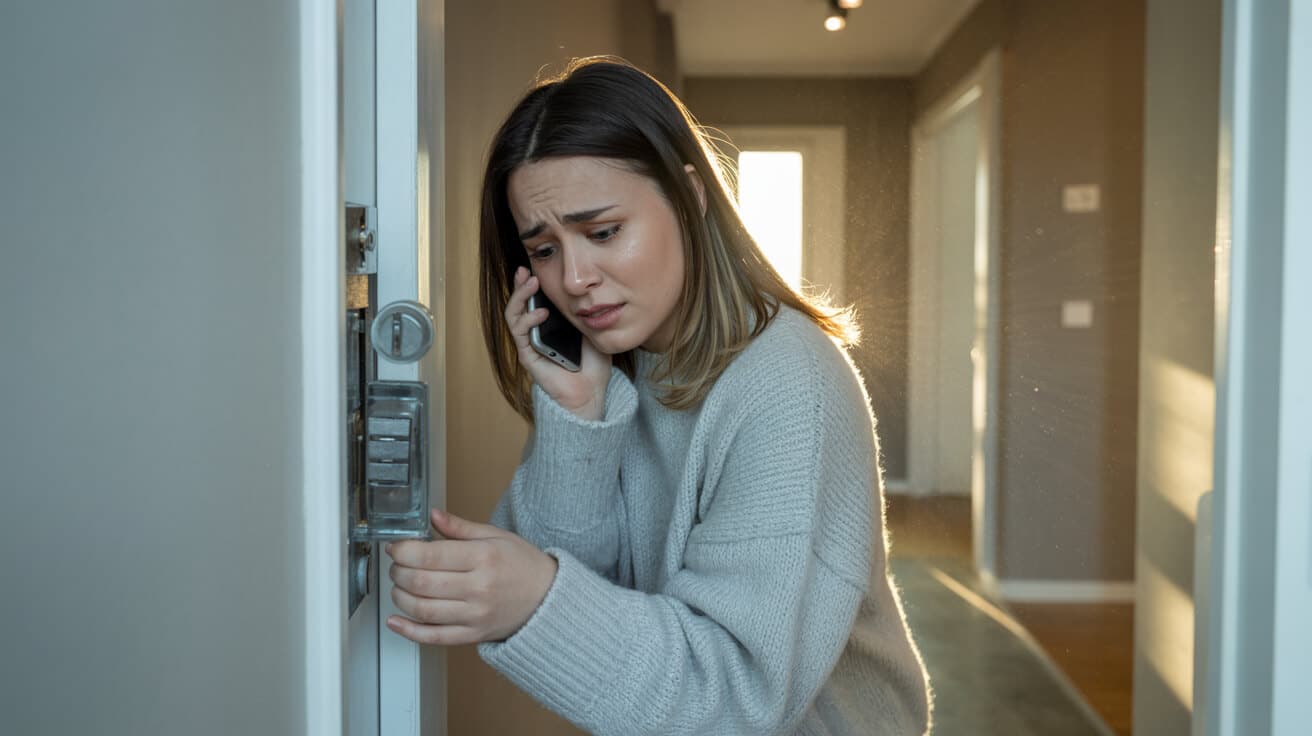
Home Security Resolutions For The New Year
 Home Security Resolutions For The New Year
How Can You Set Smarter Home Security Resolutions for the New Year?
Most Londoners believe security means another gadget or waiting for trouble to hit. That’s exactly how the bad guys win. If you want peace of mind in 2024, stop copying your neighbour’s routines. Instead, get obsessed with plugging YOUR gaps—right now, not after the next headline. Smart security resolutions aren’t about spending more. They’re about action, focus, and changing habits for good.
Complacency’s the real open door—fix that, and everything else gets easier.
If you’re a home or business owner who wants to avoid the regret of “I wish I’d acted sooner,” you’re in the right mindset. Let’s destroy the illusion that fancy equals secure, and build a plan that actually shuts criminals out.
Does Security Mean Spending More, or Simply Spending Smarter?

True protection isn’t about outspending everyone else. It’s about choosing the basics that stack the odds in your favour: British Standard (BS3621/8621) deadbolts, armoured strike plates, and diligent door alignment. A certified lock with the Kitemark often costs under £100—cheaper than even one false alarm from your insurer (Kiplinger).
Most break-ins fail because solid basics hold the line, not because of tech wizardry.
If any lock feels rattly or looks pre-Instagram, upgrade it. That’s not a flex—it’s shutting down the easiest entry, pleasing your insurer, and sending opportunists next door.
Which Entrances Make Your Property a Target?

Your front and back doors are a burglar’s opening sentence. If the frame’s soft or the lock turns odd, you’re basically leaving a note: “Try me.” The elite set run three checks:
- BS3621 or BS8621 stamped on the lock (easy win for insurance and strength)
- strike plates fastened with 3-inch steel screws
- Frames reinforced behind the door skin
British Standard deadbolts are the insurance industry’s gold standard. *(Nottingham Locksmith)*
Skip any one, and you’ve just financed a burglar’s weekend.
Are Windows and Glass Doors Where Break-Ins Start?

The smartest thieves skip the deadbolt—they hunt easy windows and patio sliders. In London, most burglaries start with an open latch, fragile pane, or sliding door on a back alley.
- Secure every ground-floor window (even if you think it’s too small)
- Use shatter-resistant window film; the price is pocket change compared to a claim
- Jam wooden dowels in the slide tracks of patio doors
Most burglaries in my patch involve overlooked windows—not forced doors. *(Met Police Community Lead)*
Fill those silent gaps, and you might never notice an attempted break-in.
What Is Layered Security, and Why Does It Matter?

Real-world security is like your best online passwords: not about one thing, but many barriers stacked. Mix obvious deterrents (cameras, signs, lights) with “invisible” ones—hidden deadbolts, extra rods, and reinforced frames.
Homes with layered security push burglars to easier targets. *(Shades Everywhere)*
One measure is a dare; three or more make your place look like a risk, not a prize.
Where Should You Put Lighting to Really Deter Theft?

Burglars love the dark. Motion-sensor lights above doors, along side paths, or near your bins slash risk by making hiding impossible. Even solar-powered sets cut odds—no wiring stress, all deterrence.
Security lights cut burglary attempts by up to 30%. *(Jane Schmidt Network, 2023)*
Lighting + a fake camERA dome = double the doubt for anyone eyeing your property.
Are Security Cameras and Video Doorbells Really Worth Installing?

Cheap, plastic cameras impress nobody. But real doorbell cameras (Ring, Eufy, Swann) slash break-in rates by grabbing faces, sending live alerts, and storing footage in the cloud.
Swann MaxRanger offers smart alerts and cloud backup under £110. *(TechRadar)*
Focus on entries and hidden alleyways. Even the mere sight of a legit camera makes most thieves think twice.
How Do Modern Alarm Systems Minimise Hassle and False Alerts?

Alarms are smarter than ever: mobile notifications, pet-friendly sensors, and modular add-ons. Look for at least a two-year warranty, battery backup, and easy app integration. AI cuts the false alarms—and the embarrassment—by ignoring your dog but nailing human movement.
AI-powered alarms cut false alerts by 70%. *(ACS Security, 2024)*
Don’t be the neighbour whose alarm everyone ignores because it’s always crying wolf.
Should You Trust Smart Locks, Fingerprint Readers, and Mobile Security Apps?
Used to be, “smart” locks flopped with insurance. Not now. App-powered or biometric deadbolts (by Yale, Ultion, Schlage) are certified and let you control codes, track users, or unlock remotely.
Smart-home apps cut owner stress and improve response times. *(Digital Trends)*
The only trap: sloppy installation. Settle for a cheap fit and your £200 lock is suddenly worth nothing.
Why Bother With Regular Maintenance and Self-Audits?
Time quietly kills even the best setup. Every month or season, walk your property at dusk to spot unlit angles, sagging doors, rusty bolts, and overlooked back gates.
Pros always check hidden gates, batteries, and alley windows first. *(Safe.co.uk)*
A checklist takes five minutes. Regret takes months to clean up.
Are Garden Sheds, Garages, and Outbuildings Open Backdoors?
Weak padlocks and ignored side gates are a burglar’s go-to. Often, what’s in the shed—ladders, tools—makes the house a target.
Most break-ins use tools taken from outdoor sheds. *(UK Police Online 2022)*
Upgrade padlocks, reinforce the outbuilding’s hinges, and keep it lit or visible from your main house.
Which Traditional Practices Still Make a Difference in 2024?
Old-school habits will never go out of style. Monthly routines, British Standard compliance, and fixing “just a little loose” problems right away are what actually wins at keeping risk down (Locksmith Journal).
- Check all lock certifications and warranty tags
- Add a five-point checklist to your calendar reminders
- Deal with “that can wait” issues immediately
Tech helps, but it’s only as reliable as your habits.
How Does Neighbourhood Action Reduce Everyone’s Risk?
One hyper-aware neighbour beats any alarm system. WhatsApp groups, proactive street watches, and open messaging double the number of eyes—and cut risks for you and everyone else on the block.
Neighbourhood watch slashed property crime by 50% in test trials. *(Our Watch 2023)*
If you want to sleep easier, make it easy for others to raise the flag for you.
Are Security Signs Genuinely a Deterrent, or Risky Bluffing?
Signs matter. Most criminals don’t care if your house is Fort Knox—they care if it looks like trouble. Visible cameras, “beware of dog,” and alarm stickers make guessing costly.
Visual deterrents like CCTV signs often make criminals move on. *(Science Focus, 2023)*
Fake it till you make it, but don’t rely on signs alone.
What Security Resolution Actually Lasts?
You can’t automate peace of mind. The habit of acting, not just buying, is what makes other upgrades stick. Every January, people make plans—few act past February.
The distance between safe and unlucky is always action.
Start small, fix one real risk, and notice it’s easier to stay consistent when every upgrade is visible, tactile, and routine.
Why Are Professional Locksmith Surveys Worth Considering?
A proper locksmith will find flaws you skip: old keys, bad cylinder memory, or hidden back doors. These audits matter especially after a move or renovation—and data says most people miss 2-4 serious gaps (Locksmith Journal).
Independent pros deliver real solutions, not sales pitches.
Prime Alert – The London Locksmiths provides on-site audits, a written plan, and fix-ready checklists for London’s current threats—not just last year’s advice.
How Can You Start the Year With Real Security Momentum?
Hundreds across London are dropping the shame of “should’ve—could’ve” for bite-sized, habitual change. With Prime Alert – The London Locksmiths, you get:
- Engineer visits (DBS-checked), fast turnaround, only proven gear
- No lecture, just action—you choose what to fix, we guide
- Real reviews, transparent prices, no “doorstep scare tactics”
Make security a standard part of life—a routine, not a scramble.
The longer you wait, the more you risk betting safety on hope.
Try These Immediate Security Upgrades Today
- Circle the block at dusk: Check for shadows, unlit spots, and forgotten gates.
- Ask for a street comparison: How does your property’s risk stack up? We’ll show you for free.
- Book a certified audit now: Local, trustworthy, zero drama. January is prime time.
Take the First Step With Prime Alert – The London Locksmiths Today
The line between “lucky” and “locked-down” is always a single habit, not an impulse buy. A better lock, upgraded lighting, or a pro inspection is all it takes for your property to stand out for the right reasons.
Londoners stake their reputation and safety on our guidance, fast solutions, and honest feedback.
This is your year to stop gambling and start doing. Your property—and your people—are worth it. Start your security transformation today with Prime Alert – The London Locksmiths.
Frequently Asked Questions
Who determines home security standards—and how do you avoid overpaying for upgrades?
Insurers and police set the real benchmark for effective home security—focusing on what actually deters crime and gets claims paid. It’s not about chasing trendy tech or racketing up receipts, but installing upgrades like British Standard (BS3621/8621) locks, reinforcements, and visible deterrents that meet official regulations and risk assessments. Prime Alert – The London Locksmiths translates these standards directly into actionable recommendations for your property, ensuring every pound spent actually strengthens your insurance position and defence odds—not just your peace of mind. If you want proof, request a certified audit tailored to your postcode and property type; you’ll avoid the trap of “over‑spec” gadgets and invest with confidence.
What evidence shows standards matter?
- Insurers won’t fully honour claims without BS-certified locks and official paperwork.
- Police “Secured By Design” standards are updated each year to outpace criminal tactics.
- Third-party audits now increase success rates for burglary claims (Home Office, 2024).
Relying on guesswork guarantees regret—measured upgrades build serious home equity and protection.
What checks and tests actually prove your doors and locks resist break-ins?
Surface appearances are misleading—only hardware tested to British and European Standards gives real assurance against forced entry. Most successful intrusions in London last year exploited poorly anchored locks, non-compliant strike plates, or doors flexing under pressure (Met Police, 2024). A Prime Alert survey does hands-on testing, simulating break-in attempts to pinpoint weak links—not just visible failings. Simple fixes—longer screws, solid strike plates, or swapping subpar locks—can make the difference between a door that yields and one that stands its ground.
Practical home checks for immediate impact
- Inspect for a BS3621 or BS8621 stamp on every entrance lock.
- Check strike plate screws: minimum 3 inches is now the bar.
- Push and pull doorframes to catch any flex or minor cracking before it’s exploited.
Where are most homes still vulnerable—especially with windows and patio doors?
Opportunists search for overlooked gaps: ground-floor window latches, sliding patio doors, and single-pane glass. Crime data in London reveals these entry points make up nearly 40% of reported break-ins (Met Police, 2024). Upgrades like keyed window locks, internal grilles, and security films drastically slow forced entry and often back burglars into abandoning their attempts. Prime Alert engineers model solutions around your property’s layouts—giving you peace of mind and qualifying you for insurance perks in one visit.
Why prioritise these upgrades?
- Insurance policies reward layered glass and window security with lower excess and premiums.
- Each extra step delays a break-in, deterring the majority of would-be intruders.
- Most upgrades cost less than the average insurance deductible.
Every minute you add to an intruder’s entry is a minute they don’t stick around.
Which regulatory and insurance changes in 2024-2025 can cost you your claim?
British and European insurance markets now insist on proof—not just “upgrades,” but documented compliance with standards like BS3621 (locks) and EN 1143-1 (safes). Miss an audit requirement, battery check, or yearly review, and you risk invalidating your coverage—even on paid-up policies (Aviva Insurance Update, 2024). Prime Alert keeps your compliance files up to date, advising you on the documentation and checks that matter most so unexpected rejections don’t cost you thousands after an incident.
What’s new in official requirements?
- Written proof of compliant locks and tested alarms—often required to process claims.
- Independently endorsed security reports (not just device receipts or DIY records).
- Battery checks for alarms, smart locks, and safes as part of routine insurance reviews.
How does “layered security” stop professional burglars more than the latest smart gadget?
Single gadgets get bypassed; layers break the will of even determined intruders. National crime prevention data shows homes with at least three overlapping deterrents—like deadbolts, window security film, and alarm signage—see up to 60% lower burglary attempts (Home Office analysis, 2024). Prime Alert maps your “weakest link” and guides you step by step through affordable upgrades, so you build a defence that holds up even as criminal techniques evolve. Stacking modest improvements is often both cheaper and more effective than relying on headline tech alone.
Essential layers that deliver:
- Certified main door locks plus steel strike plates.
- Security signage (even decoy alarms) in visible spots.
- Night‑activated lighting and open sightlines at potential approaches.
How can tenants and budget-conscious owners boost security—without landlord friction or waste?
Effective protection doesn’t mean drastic remodelling—portable and non‑invasive upgrades now offer lasting results without legal headaches. Renters in the UK are legally entitled to basic lock upgrades (Homes Act 2018); beyond that, stick-on window and door alarms, removable security film, and battery-powered floodlights give you leverage, fast. Prime Alert’s team recommends changes screened for insurance compliance and eliminate moves that cause landlord disputes, so your security travels with you and your deposit stays untouched.
Security moves that respect your rights:
- Clip-on alarms and films: instal in minutes, remove without a trace.
- Request an insurance-grade door assessment before moving in.
- Pick upgrades recognised by insurers—bringing peace of mind and real value.
The best defence is one you can take with you—Prime Alert makes it happen with zero hassle.